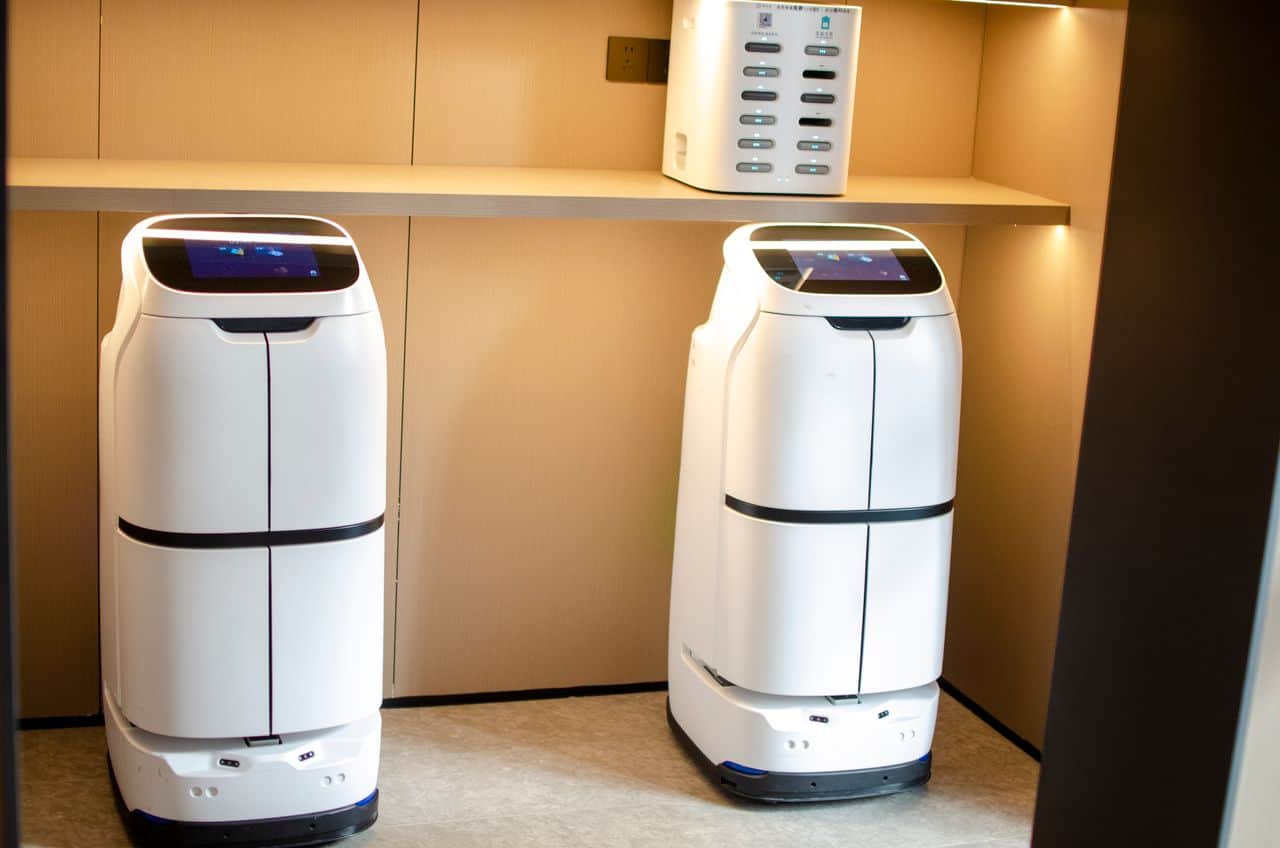
Advances in robotics foundation models are set to reshape automation, creating a potential US$150 billion global market by 2036 as Physical AI enables machines to perform complex, variable tasks previously out of reach for traditional automata, according to a new report from ABI Research.
From factories to restaurants
ABI Research forecasts that manufacturing will capture the largest near-term share, with a projected total addressable market (TAM) of US$30 billion by 2036. Warehousing and logistics follow at US$21 billion, while healthcare applications — including assisted therapy, patient handling and supply-chain automation — are expected to reach around US$16 billion.
Together, restaurants, retail and hospitality could add another US$27 billion as operators use more capable robots to reduce labour costs, manage peaks and increase operational flexibility.
The firm says robotics foundation models expand the remit of automation beyond repetitive, highly controlled tasks to activities that require dexterity, perception and reasoning about deformable or varied objects. That broadening of capability opens opportunities across labour-intensive sectors such as cleaning, food preparation, stocking and basic caregiving.
Ecosystem and compute at the core
ABI Research underlines that market realisation will depend on more than model accuracy. A supporting ecosystem of training data, simulation, orchestration tools and robust edge deployment is essential.
On-device compute already has a leader: NVIDIA’s Jetson family. Meanwhile cloud providers including AWS, Microsoft Azure and Google Cloud are poised to support model training and lifecycle management. Competitors such as Intel, AMD, Qualcomm and Ambarella are developing alternative stacks for edge robotics.
“Robotics foundation models represent a major shift in what enterprises can realistically automate,” said George Chowdhury, principal analyst at ABI Research.
“As these models improve generalisation and enable robots to handle more variable tasks, they will open new revenue opportunities across manufacturing, logistics, healthcare, retail, hospitality, and eventually the home.” George Chowdhury
Commercial adoption and safety
ABI expects early commercial traction in environments where safety, repeatability and return on investment are straightforward to demonstrate. Collaborative robots and established industrial deployments will therefore lead, with lessons from automotive autonomy informing safety, liability and deployment frameworks for more dynamic public settings.
The report notes that robotics foundation models will benefit a wide range of form factors — from humanoid prototypes to mobile manipulators, drones and autonomous guided vehicles. In some respects, robotics could outpace automotive in deployment scale because many controlled commercial environments offer quicker paths to demonstrable ROI.
Challenges remain, including workforce transition, regulatory clarity and the need for interoperable standards for simulation and orchestration. But as the technical and commercial ecosystems mature, ABI Research argues the opportunity for robotic automation will expand rapidly into tasks once considered too variable or complex to automate, promising material productivity gains across multiple sectors.