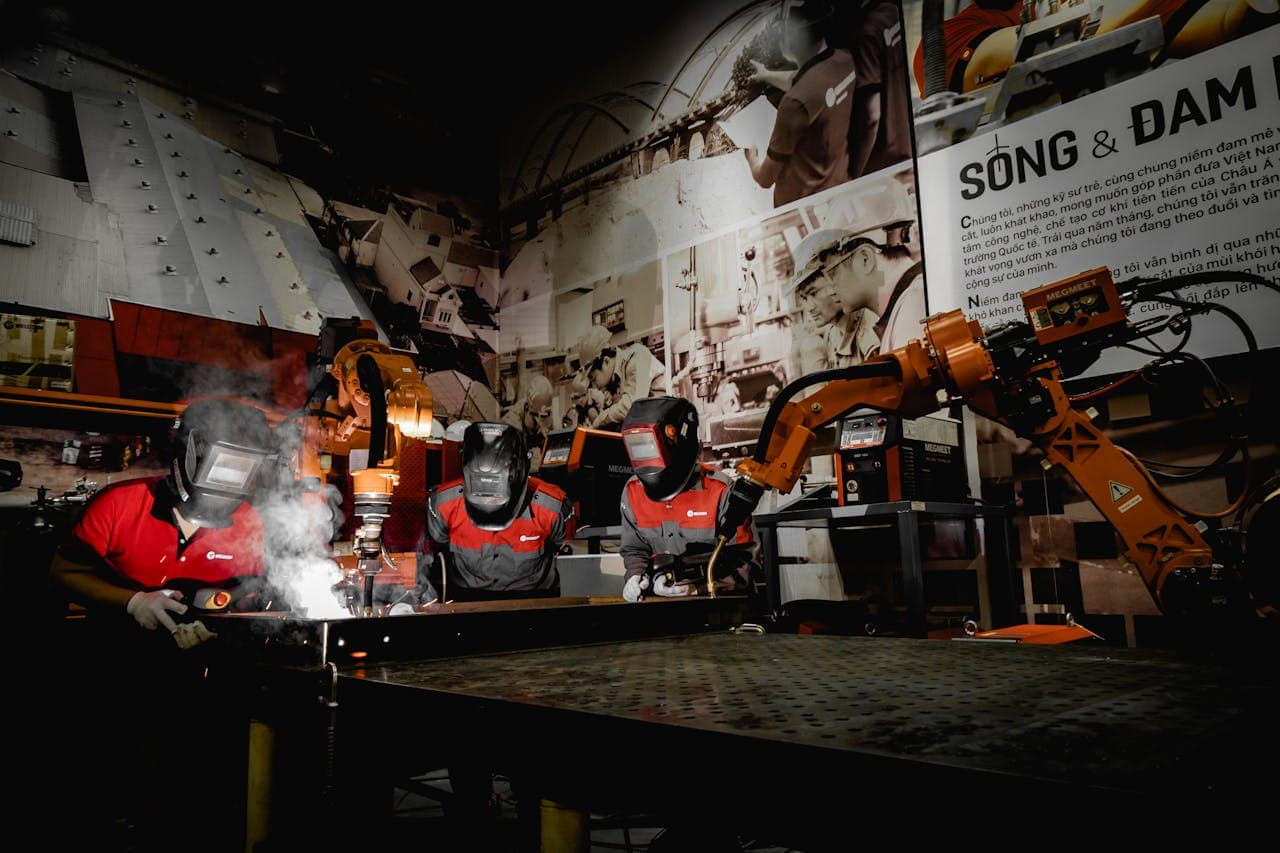
Juniper Research forecasts that deployments of physical AI systems in manufacturing and logistics will reach 400,000 by 2030, an increase of 3,500% from 2026, as real‑time processing and more advanced models improve both capability and safety.
The study defines physical AI as systems that can perceive, reason and act in the real world, combining inputs from images, video, text, speech and sensors to drive autonomous machines in warehouses, factories and distribution centres.
Growth drivers and capabilities
The surge in deployments reflects growing demand for automation in sectors facing labour shortages, rising safety expectations and pressure to cut costs. Autonomous mobile robots (AMRs), automated guided vehicles (AGVs), collaborative robots, robotic picking and sorting, and automated inspection systems are all benefiting from advances such as Vision‑Language‑Action (VLA) models, high‑fidelity simulations, deep reinforcement learning and cloud‑to‑edge compute, according to the research firm.
“Multiple technological advancements are converging to accelerate physical AI adoption,” said Molly Gatford, senior research analyst at Juniper Research.
“Reduced latency from improved real‑time processing is enabling more reliable real‑world operation, while more advanced models allow systems to respond to a broader range of inputs, including tactile data.” Molly Gatford
From development to deployment
As technical barriers fall, vendors must shift from research and prototypes toward large‑scale deployment. Juniper stresses that partnerships with connectivity providers, particularly those offering edge‑enabled architectures, are essential to support low‑latency, real‑time decision‑making.
“Vendors must prioritise connectivity partners that offer edge‑enabled connectivity architectures; allowing physical AI systems to process data locally and reduce latency constraints,” Gatford noted.
Such arrangements are critical as modern physical AI models ingest data from multiple sensors simultaneously, requiring robust, distributed compute.
The study cites examples including AMRs that use Simultaneous Localization and Mapping (SLAM) and AI to navigate unstructured environments, AGVs following fixed guidance paths, and collaborative robots equipped with safety sensors for human‑machine co‑operation.
These systems are already helping firms reduce manual labour, improve throughput and increase consistency in quality control. The 3,500% growth projection underscores the expectation that physical AI will move beyond niche pilots into a core component of operating models in manufacturing and logistics.