As AI adoption in fraud and anti-money laundering (AML) teams reaches near-universal levels, the line between productivity and risk has never been finer.
In Southeast Asia—a region where digital financial services are booming alongside increasingly sophisticated transnational crime—the stakes are particularly high. Unauthorised tools are introducing incomplete data into critical workflows, transforming efficiency gains into potential compliance failures.
The numbers paint a stark picture. According to a Gartner survey, 69% of cybersecurity leaders already have evidence or suspect employees are using prohibited generative AI tools at work, with the research firm projecting that over 40% of enterprises will experience a security or compliance incident linked to unauthorised shadow AI by 2030. This is not merely an IT security concern—it is fundamentally a compliance one.
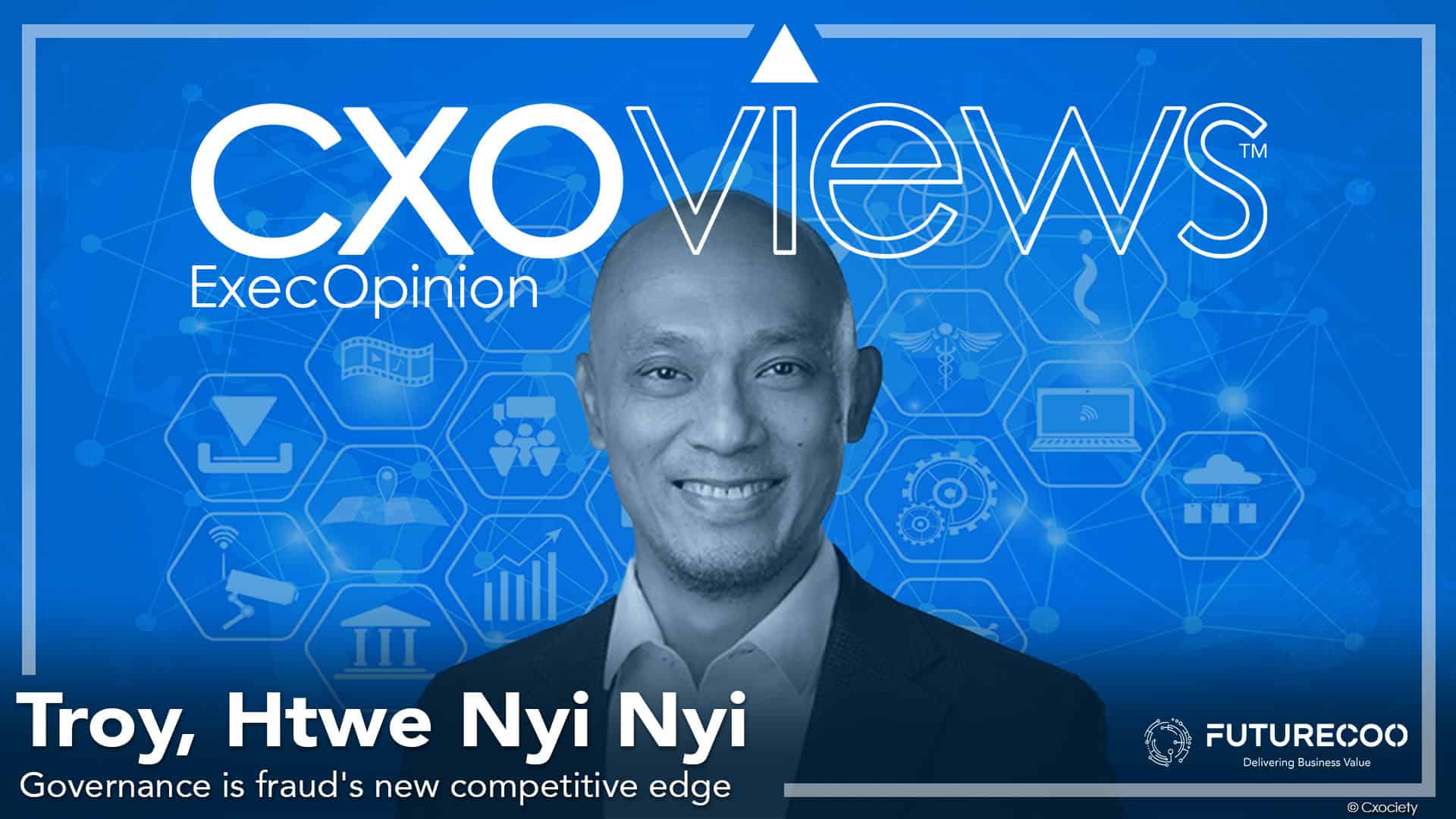
As Troy, Htwe Nyi Nyi, SVP & GM for APAC at SEON, explains, the regulated nature of financial services means every decision must be traceable to something defensible.
“If the employees are using an AI tool that is not approved or governed by the organisation, now you get the dilemma of the decision that, you know, is being influenced by some AI tool outside of an actual regulated environment.” Troy, Htwe Nyi Nyi
Regardless of whether the AI’s conclusion is correct, he argues, the inability to defend the decision to a regulator makes it a compliance failure.
This resonates deeply in Southeast Asia, where financial regulators are increasingly focused on cross-border cooperation. In June 2026, Indonesia’s Financial Services Authority (OJK) partnered with the UNODC and 12 regional partner countries to strengthen financial intelligence and AML/CFT frameworks, explicitly recognising that digital fraud is now “increasingly connected to illegal financial activities and money laundering offences”.
The message is clear: regulators are watching, and they expect traceability.
Incomplete inputs, costly outcomes
The incomplete data problem is not hypothetical. In his interview, Nyi Nyi draws on his vantage point across digital wallets, payments, and gaming platforms, observing the same fraud rings moving with the same modus operandi across different sectors.
“AI is only as good as what is being fed,” he states. “If we are missing the device intelligence information, for example, or behaviour signals, then the model is making decisions with very partial input only.”
The cost of this fragmentation is quantifiable. SEON’s 2026 Fraud & AML Leaders Report reveals that 38% of APAC leaders estimate more than a quarter of their false positives are caused by limitations in data sources.
This creates a dual problem: fraudsters exploit system gaps, while legitimate customers are wrongly flagged due to insufficient context. The report also highlights that 80% of global leaders find obtaining a unified view of data across fraud and AML systems challenging—a figure that is likely higher in Southeast Asia’s diverse and rapidly digitising markets.
Explainability and human oversight
For Nyi Nyi, the solution lies in three pillars: governance, human oversight, and explainability.
“Every AI indication, recommendation must be able to trace back to actual data and signals behind it,” he insists. “Analysts should be able to see why the alert is being triggered, not just accept it as it is.”
This tracing capability is what enables teams to defend decisions to regulators and auditors—a requirement that becomes non-negotiable when dealing with financial crime.
Crucially, AI in fraud and AML is not viewed as a replacement for human analysts. According to the SEON report, 85% of fraud and AML leaders see AI as supporting human analysts, while only 12% expect it to replace analyst tasks eventually.
This finding reflects a broader industry comfort level with augmentation rather than automation. As Nyi Nyi puts it, “AI is good at detecting bigger volumes and patterns and automating repetitive work, but analysts still need to be responsible for any high-risk calls.”
This aligns with emerging regulatory guidance. The Financial Stability Board’s June 2026 consultation report on responsible AI adoption, led by Singapore’s Monetary Authority, explicitly acknowledges that continuous human monitoring of individual AI agent decisions becomes impractical at scale. It recommends supplementing human oversight with AI that monitors other AI, while retaining ultimate accountability for institutions and individuals.
When asked whether competitive advantage comes from superior AI or better governance, Nyi Nyi rejects the binary.
“AI only creates value if the organisation actually trusts the outputs enough so that they will act on it confidently,” he says. “But governance has to be there because that governance is what makes the trust possible.”
This combination, he argues, is what turns AI from a “cool and interesting capability” into something that can scale without adding additional risk.
For Southeast Asian organisations, this is particularly relevant given the region’s complex regulatory landscape and the rapid evolution of fraud threats. The SEON report notes that 33% of leaders identify data privacy regulations as the biggest external factor expected to impact AML compliance, while 25% point to criminals’ increasing use of AI and obfuscation techniques.
As Nyi Nyi warns, “The bad guys are also improving very fast—in fact, sometimes they move even faster than us.”
His advice for business leaders is pragmatic: governance first, then consolidation, then automation. “There has to be data and signal and visibility sharing across fraud, AML and compliance teams,” he advises.
“Jump into automation without having the basic foundation and consolidation, and you will end up with a very cool tool and technology, but with a lot of unintentional results and inaccurate performance.” Troy, Htwe Nyi Nyi
The imperative in the new frontier
For Southeast Asia’s financial institutions, the path forward is clear. The adoption of AI in fraud and AML is no longer optional—it is universal. But universal adoption without universal governance creates dangerous blind spots.
As fraud rings professionalise their operations, adopting “franchise” models that move seamlessly across jurisdictions, the organisations that will succeed are those that treat governance not as a compliance checkbox but as a strategic enabler.
In Nyi Nyi’s words, “The organisations combining strong AI with strong governance are the ones detecting threats faster while still maintaining confidence from customers and regulators.” That combination—not the most tools, but the clearest signals and strongest alignment between people, process, and technology—is where competitive advantage lies.
Allan is Group Editor-in-Chief for CXOCIETY writing for FutureIoT, FutureCIO and FutureCFO. He supports content marketing engagements for CXOCIETY clients, as well as moderates senior-level discussions and speaks at events.
Previous Roles
He served as Group Editor-in-Chief for Questex Asia concurrent to the Regional Content and Strategy Director role.
He was the Director of Technology Practice at Hill+Knowlton in Hong Kong and Director of Client Services at EBA Communications.
He also served as Marketing Director for Asia at Hitachi Data Systems and served as Country Sales Manager for HDS’ Philippine. Other sales roles include Encore Computer and First International Computer.
He was a Senior Industry Analyst at Dataquest (Gartner Group) covering IT Professional Services for Asia-Pacific.
He moved to Hong Kong as a Network Specialist and later MIS Manager at Imagineering/Tech Pacific.
He holds a Bachelor of Science in Electronics and Communications Engineering degree and is a certified PICK programmer.