
SAP’s latest research suggests Singapore businesses are moving quickly from AI experimentation to execution, but the commercial upside will depend on whether they can close gaps in data quality, governance and workforce readiness.
The SAP Value of AI Report 2026 found that expected returns from agentic AI in Singapore have nearly doubled year on year, even as only 2% of organisations say they are fully prepared to govern it.news.
Returns rising fast
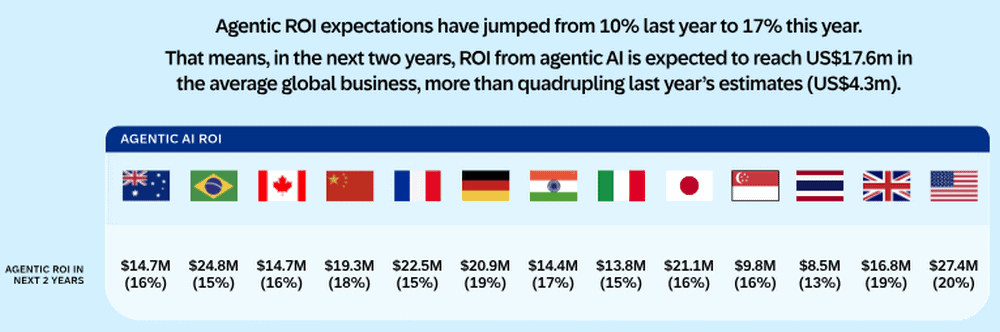
According to the report, Singapore businesses expect ROI from agentic AI to reach US$9.8 million over the next two years, up from US$4.9 million last year. Total AI ROI is also rising, with companies expecting 19% this year, equivalent to US$3.5 million, and 36% in two years’ time, or US$10.3 million.
The findings matter for operations leaders because AI is already embedded in the flow of work: 27% of tasks in the average Singapore business are supported by AI today, and that share is forecast to climb to 47% within two years. SAP said 89% of local businesses see agentic AI as having moderate to very high potential to transform their organisation.
Readiness gap
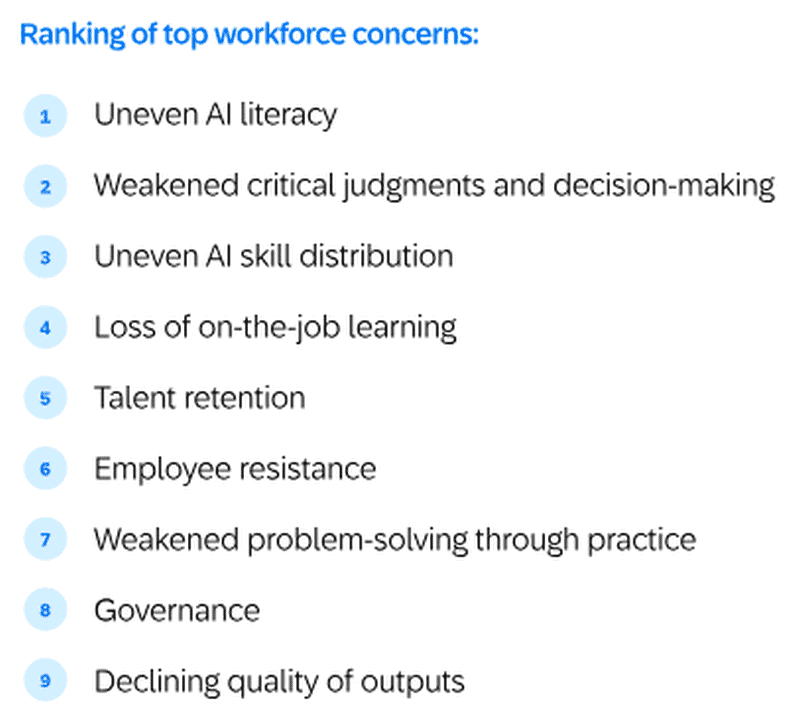
That optimism is being tested by uneven operating maturity. Less than half of Singapore companies have a dedicated AI leader, while only 32% have leadership KPIs for AI and 37% provide training on AI capabilities and risks. Almost eight in ten respondents said they are not convinced company upskilling is keeping pace with AI tools.
Data quality is emerging as a practical bottleneck. The share of businesses saying they are data-ready for AI fell to 55% in 2026 from 62% in 2025, while 82% reported incomplete data challenges. SAP said 81% are already seeing rework, delays or backlogs due to low-quality AI outputs, a signal that AI is beginning to affect core operating performance, not just digital projects.
Governance becomes operational
For business leaders, the sharper issue is governance. Only about one in ten Singapore businesses said their skills or their processes and frameworks are fully ready to govern AI effectively. In agentic AI, the gap is even more acute: 27% do not have a human-in-the-loop process, 30% lack permission and access controls for agents, and only 40% have a registry of the agents in use.
Eileen Chua, managing director, SAP Singapore, said: “Singapore businesses are moving from AI experimentation to AI execution, and the expected returns from agentic AI show just how much confidence there is in the technology."

"But value will not come from AI adoption alone. It will come from connecting AI to business data, processes and governance, so organizations can move faster while still acting with control and confidence." Eileen Chua
She added that agentic AI raises the stakes for enterprise readiness, because organisations need visibility into where agents are operating, what data they can access, and where human oversight is required.