
Singapore’s workforce is charging ahead on AI adoption, but a growing chasm between employee capability and organisational readiness is creating an urgent mandate for CHROs across Asia.
The latest Microsoft 2026 Work Trend Index reveals that while 66% of Singapore’s AI users are producing work they couldn't have a year ago, only 24% feel their leadership is clearly aligned on AI strategy. In Hong Kong, the percentage is 57% of AI users while 19% of leadership not aligned when it comes to AI strategy.
This disconnect defines the “Transformation Paradox” and places the onus squarely on HR to redesign the systems of work.
For CHROs in 2026-2027, the message is clear: the competitive advantage no longer lies in tool deployment, but in cultivating “human agency” .
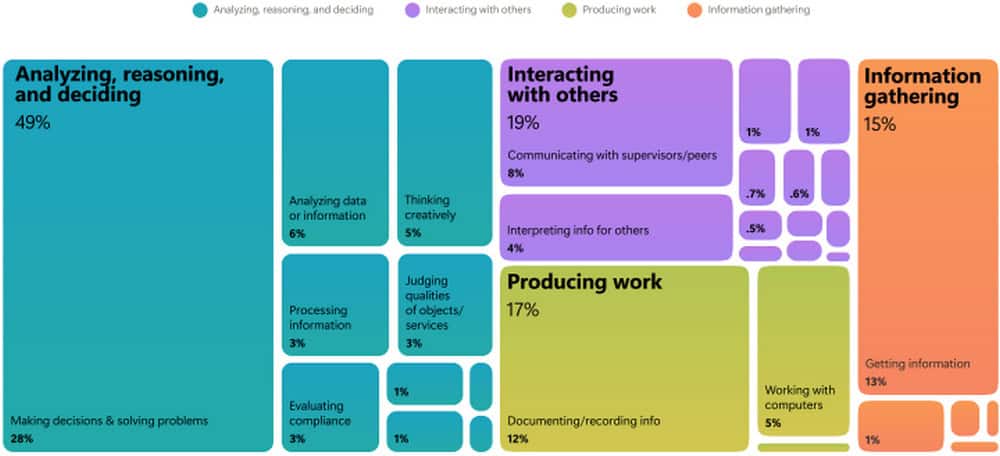
As AI agents handle more execution, the premium shifts to uniquely human skills like critical thinking, judgment, and quality control—which 52% of Singaporean workers now identify as paramount.
The research shows that Frontier Professionals, the most advanced AI users, are distinguished not by their technical skill but by their managers who openly use AI and create space for experimentation.
“Singapore's workforce is among the most AI-ready in the world… The opportunity now is for organisations to reinforce that momentum with clearer leadership alignment, stronger managerial signals, and operating models designed for reinvention,” said Wee Luen Chia, managing director of Microsoft Singapore.
Leo Liu, general manager of Microsoft Hong Kong and Macau, offers a slightly different on the the transformation paradox engulfing the city: "Many organisations are still trying to fit it into old operating models. To unlock real value, leaders must move beyond pilots and productivity gains, and intentionally redesign how work gets done—how teams collaborate, how managers lead, and how success is measured.”
The data underscores that organisational culture and management practices account for twice the AI impact of individual effort alone.
For CHROs, this signals a fundamental shift: talent strategies must reward reinvention and workflow redesign, not just task completion. The risk for Asian organisations is significant; as one analyst notes, without governance maturity, the cost and effectiveness of scaling AI agents could become financially unsustainable.
The Transformation Paradox according to BCG
- Successful growth transformations hinge on balancing creativity with disciplined execution—embracing innovation systematically rather than relying on chance.
- Companies must simultaneously pursue long-term visions and short-term foundations, effectively communicating with stakeholders and efficiently reallocating resources.
- Building adaptability through repeated transformation experience significantly boosts long-term success rates, enabling businesses to proactively shape their future rather than merely reacting to disruptions.
According to Lorraine Bardeen, corporate vice president, MCAPS AI Transformation, Microsoft. “When leaders clarify how humans and agents work together, set standards for quality and judgment, and create room to experiment, organisations move faster and learn faster. That’s what separates Frontier Firms from everyone else.”