By 2026, the digital corridors of Asian enterprise will have become a paradox of plenty. From the hyper-connected hubs of Singapore to the sprawling archipelago of the Philippines, Chief Operating Officers are no longer asking if they should deploy Artificial Intelligence, but how to stop the chaos of disjointed applications from strangling their customer experience.
As organisations race to integrate platforms like WhatsApp with legacy voice systems, the region stands at a critical juncture. The era of "point solutions" is colliding with the demand for measurable return on investment.
According to a recent discussion on PodChats for FutureCOO, the focus has shifted dramatically towards a "Resolution Economy"—an economic model that prioritises guaranteed outcomes over fragmented, siloed technologies.
In an exclusive interview, Mao Gen Foo, vice president, Asia at Genesys, dissected this tension. Drawing from the Genesys Cloud platform's latest expanded integration with Meta, he articulates a vision for 2026 that moves beyond the hype cycle toward what he calls "orchestration".
The pushback on the platform
For the last three years, the boardroom mandate was simple: adopt cloud, adopt AI, or become irrelevant. But in 2026, the narrative has matured. Finance leaders are demanding accountability.
"Absolutely. And it makes a lot of sense. It's not just SaaS. I think AI itself demands even more in terms of being outcome accountable," Foo stated.
He notes that while the total cost of ownership (TCO) justifies the shift to the cloud, the "pushback" is now firmly centred on AI. "Every board member, every C-level… you've got to sit around the table and be able to boast about what you are doing with AI to your peers," he observes. "But soon it will settle down, and organisations will find the middle ground of where the returns versus investments make sense."
This sentiment echoes broader industry data. Forrester's recent analyses on operational technology suggest that edge computing and AI are no longer experimental differentiators but strategic necessities for survival in Asia's competitive landscape. The "cool factor" of 2025 has given way to the EBITDA reality of 2026.
Point solution vs native orchestration
One of the most significant shifts in the 2026 enterprise messaging landscape is the integration of consumer-grade channels—specifically WhatsApp—into mission-critical workflows. While beneficial, this presents a risk: the creation of yet another data silo.
The integration of voice and messaging via WhatsApp on Genesys Cloud allows a customer to seamlessly switch from chat to a voice call without losing context. However, as Foo warns, technology for technology's sake is a trap. "Just because you have WhatsApp doesn't mean it solves all problems," he cautions, adding that the hard work is not the API connection but the "customer journey design."
To prevent disruption, Genesys has adopted a rigorous architectural discipline. Unlike competitors who port acquired technologies, Foo explains that Genesys rebuilds them natively into its microservices architecture.

"That ensures the stability and cleanliness of the architecture, instead of keeping porting on… from a scalability perspective, [that] is very challenging." Mao Gen Foo
The trust deficit and data sovereignty
In Asia's disparate regulatory environment—from Australia's strict privacy laws to Indonesia's data sovereignty mandates—trust has become the "core currency of doing business."
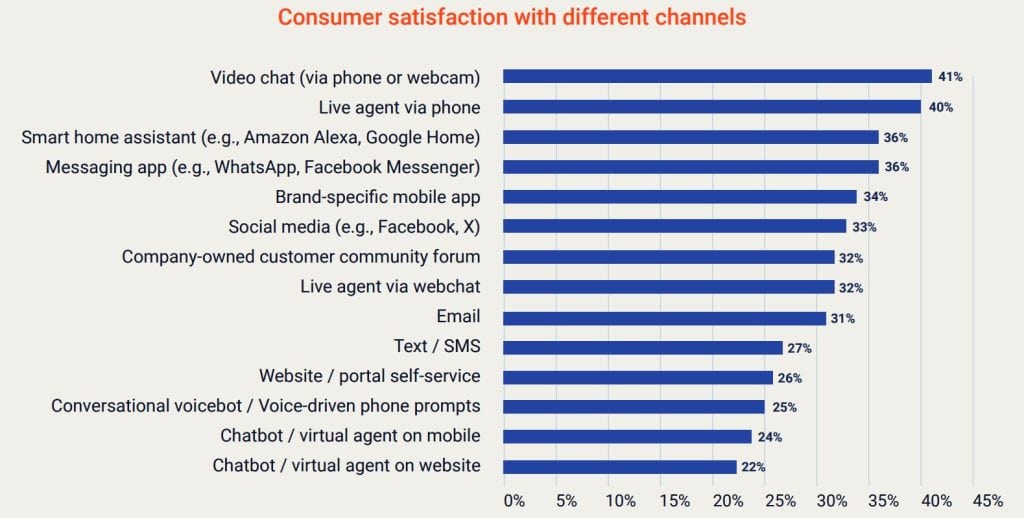
Foo highlights a critical finding from a recent Genesys CX study: the highest consumer concern regarding AI is trust. To combat this, enterprises in 2026 are demanding "auditability" and "explainability" in their AI models.
"How can we audit real-time AI decisions made during this seamless WhatsApp-to-voice transition?" he asks, paraphrasing a common client query. His answer lies in design. "If your AI was applied to make a decision, there is evidence of what the decision was and the reasoning behind it."
This is particularly vital in markets like the Philippines or Thailand, where the BPO sector is heavily reliant on human agents. Leaders fear that automation will erode the human touch, but Foo reframes this anxiety. By automating "after-call work"—reducing it by up to 90%—AI frees agents to become "specialists" handling complex cases, or even "semi-coders" who write prompts to design workflows.
The productivity flywheel
For the COO managing 2026 budgets, the challenge is balancing the "innovation tax" of new tech against operational stability. The solution, according to Genesys, is the "flywheel."
Using AI to optimise existing costs creates the capital to fund the next wave of innovation. "Companies continue to look at how actually to optimise costs," says Genesys' Foo. "We can help them figure out the lowest hanging fruit where you can get very quick ROI."
However, he cautions against the "Shadow IT" risk posed by employees using public AI tools (such as public ChatGPT) for work. The answer is three-pronged: education, blocking dangerous sites, and, crucially, providing a superior enterprise tool. If the internal AI is trained on the company's specific knowledge base, the "urge to use what's outside" dissipates.
Competing on experience
As Asia looks toward 2027, the COO's agenda is clear. The era of the "call centre" is dead. The "experience centre" is the new operational model. Metrics are shifting from Average Handling Time (AHT) to customer loyalty and resolution velocity.
"The technology doesn't take away the job," Foo concludes, paraphrasing a classic adage for the AI era. "The person who knows how to leverage the new technology takes away the job from the guy who doesn't."
For enterprises from Manila to Melbourne, the message is unequivocal: stop bolting on shiny objects. Start orchestrating journeys. In the resolution economy of 2026, the winners will not be those with the most AI, but those with the most seamless integration.