
• About
  • Subscribe
  • Contact
Saturday, July 11, 2026
    Login
FutureIOT
  • Technology
    • Sensors and Instrumentation
    • Devices
    • Cloud and Platforms
    • Research and Development
    • Governance, Standards and Regulations
    • Application and Middleware
    • Security
    • Big Data and Analytics
    • AI and Machine Learning
  • Industry
    • Manufacturing
    • Transportation and Logistics
    • Retail and E-commerce
    • Banking and Financial Services
    • Government, Healthcare and Education
    • Industrial
  • Application
    • Smart Cities
    • Future Workplace
    • Commercial
    • Smart Home
    • Customer Engagement
  • Resources
  • Podchats
  • Videos
  • Events
No Result
View All Result
  • Technology
    • Sensors and Instrumentation
    • Devices
    • Cloud and Platforms
    • Research and Development
    • Governance, Standards and Regulations
    • Application and Middleware
    • Security
    • Big Data and Analytics
    • AI and Machine Learning
  • Industry
    • Manufacturing
    • Transportation and Logistics
    • Retail and E-commerce
    • Banking and Financial Services
    • Government, Healthcare and Education
    • Industrial
  • Application
    • Smart Cities
    • Future Workplace
    • Commercial
    • Smart Home
    • Customer Engagement
  • Resources
  • Podchats
  • Videos
  • Events
No Result
View All Result
FutureIOT
No Result
View All Result
Home Computer, Storage, Networks, Connectivity

The quantum barrier is shifting

by Allan Tan
July 7, 2026
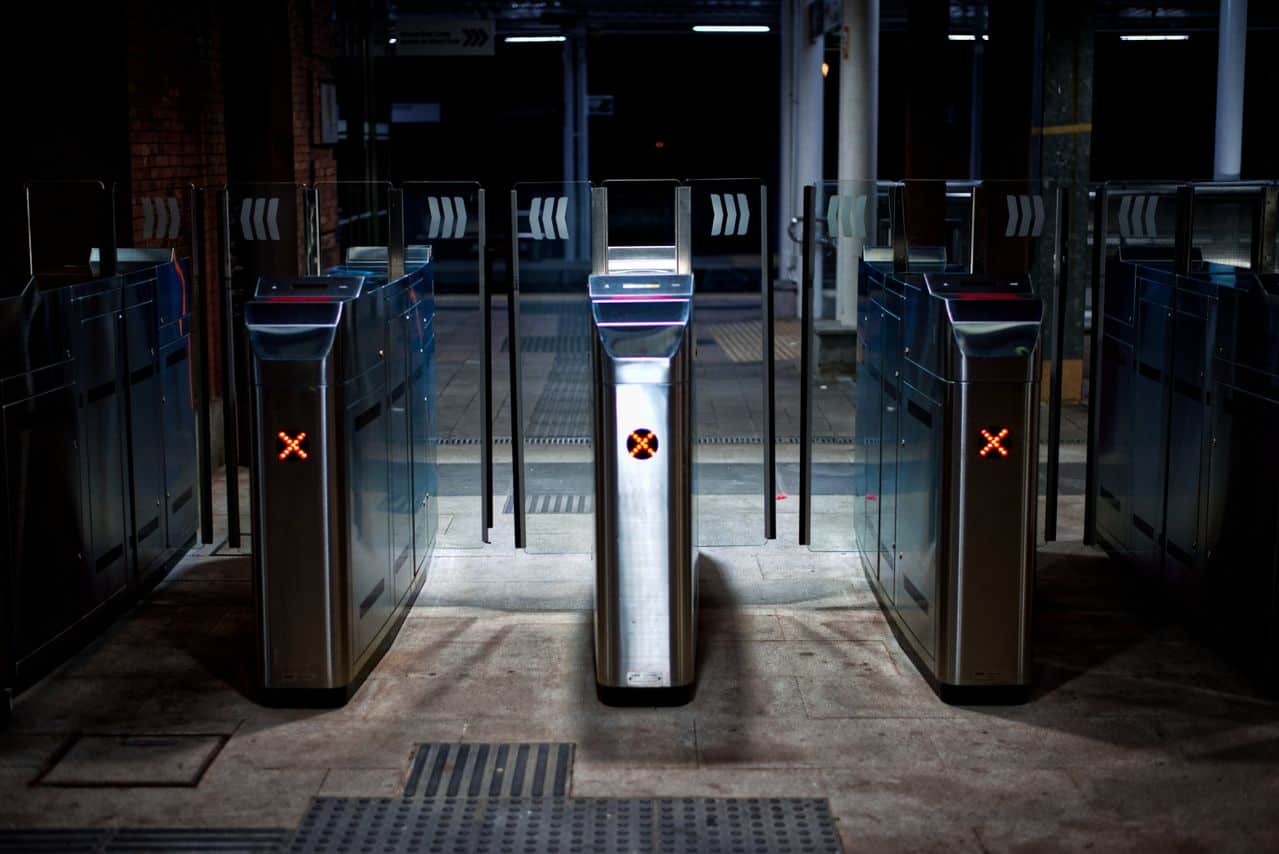
Photo by Gonzalo Carlos Novillo Lapeyra from Pexels: https://www.pexels.com/photo/security-gates-on-an-airport-12608612/

Photo by Gonzalo Carlos Novillo Lapeyra from Pexels: https://www.pexels.com/photo/security-gates-on-an-airport-12608612/

There is a peculiar assumption that clings to quantum computing like a stubborn shadow: that it remains a distant prospect, a technology for the 2030s, something to monitor from a safe distance.

The supply chain for quantum hardware is indeed stabilising, and many experts anticipate production-ready systems by the early 2030s. But to assume that benefiting from quantum now is out of the question is to misunderstand the transformative potential of quantum AI.

Quantum AI involves running machine learning algorithms on existing quantum hardware. In practice, this means accomplishing hours-long tasks in minutes, rendering problems once considered impossible suddenly tractable, and calibrating models to learn efficiently on less data with greater stability over time. It is not a future promise; it is a present capability.

So why aren't more organisations diving in?

The barriers are shifting

A SAS survey of more than 500 global leaders across industries on quantum AI, reveals an interesting evolution in executive thinking.

In 2025, the high cost of implementation ranked as the number one barrier to adoption, followed by a lack of understanding or knowledge. By 2026, the landscape has shifted.

The greatest barrier today is uncertainty around practical, real-world uses. Cost now sits in second place, followed by a lack of trained personnel, lack of knowledge or understanding, limited availability of quantum AI solutions, and finally, a lack of clear regulatory guidelines.

What this tells us is that leaders have moved past the initial hesitation about expense and complexity. They are now asking a more sophisticated question: what can we actually do with this technology?

The hybrid approach

SAS envisions classical and quantum computing as a spectrum. At one end lies proven classical computing—reliable, understood, and capable. At the other lies experimental and exponentially more powerful quantum computing. Many industry and business problems fall somewhere in the middle, with a hybrid approach splitting workloads between quantum and classical processing, each doing what it does best.

"Organisations of all sizes are eager to develop intellectual property—their original, patented approach to quantum AI—so they'll be ready as the technology comes of age," explains Bill Wisotsky, principal quantum architect at SAS. "Despite continued strong interest, leaders are understandably proceeding with caution, and they don't want to go all-in on expensive quantum investments they fear may not result in worthwhile use cases."

Enter SAS quantum lab

This is where SAS Quantum Lab enters the picture. Coming in Q4 to SAS Viya customers, it is designed as a launchpad for the quantum AI journey, a hands-on playground to learn and innovate for real-world ROI. Crucially, it is built to empower users who may not be quantum physicists but are ready to explore, test, and validate their ideas.

The lab significantly reduces the cost of quantum AI exploration and helps customers avoid false signals. Current testing shows more than 100 times speedup and 99% cost savings compared to alternative approaches. Users can compare classical, quantum, and hybrid results side-by-side for industry use cases, finding the best solutions for their business problems. A virtual quantum AI tutor accelerates learning by answering questions, offering sample code, and suggesting next steps.

Real-world applications

When survey respondents were asked to describe their quantum AI aspirations, the responses painted a picture of tangible business transformation.

Financial services leaders want to enhance fraud detection accuracy by identifying complex transaction patterns. Telecommunications experts aim to optimise 5G network path traffic in real-time.

Pharmaceutical researchers seek to accelerate molecular simulation and drug discovery. Supply chain professionals want to solve logistics optimisation problems.

Marketers hope to improve predictive modelling for customer behaviour. And AI practitioners want to train large language models with reduced time and resources.

"If you're ready to explore quantum AI, we're ready to work with you," adds Wisotsky. "Bring your ideas, and our experts will help determine if and how quantum AI can be incorporated in ways that are valuable, safe and sensible."

The quantum future is not arriving in the 2030s. It is being built today, one hybrid workload at a time.


Related:  HPE targets AI readiness with unified data platform innovations
Tags: quantum computingSAS

Allan Tan

Allan is Group Editor-in-Chief for CXOCIETY writing for FutureIoT, FutureCIO and FutureCFO. He supports content marketing engagements for CXOCIETY clients, as well as moderates senior-level discussions and speaks at events. Previous Roles He served as Group Editor-in-Chief for Questex Asia concurrent to the Regional Content and Strategy Director role. He was the Director of Technology Practice at Hill+Knowlton in Hong Kong and Director of Client Services at EBA Communications. He also served as Marketing Director for Asia at Hitachi Data Systems and served as Country Sales Manager for HDS’ Philippine. Other sales roles include Encore Computer and First International Computer. He was a Senior Industry Analyst at Dataquest (Gartner Group) covering IT Professional Services for Asia-Pacific. He moved to Hong Kong as a Network Specialist and later MIS Manager at Imagineering/Tech Pacific. He holds a Bachelor of Science in Electronics and Communications Engineering degree and is a certified PICK programmer.

No Result
View All Result

Recent Posts

  • The quantum barrier is shifting
  • Unsanctioned AI tools create invisible risk
  • Healthcare’s AI push outpaces infrastructure as shadow risks escalate
  • Closing the AI execution gap: Firms risk revenue, talent and trust
  • Readying for the coming human skills economy

Categories

  • Agriculture
  • AI and Machine Learning
  • Application
  • Application and Middleware
  • Artificial Intelligence
  • Automotive
  • Banking and Financial Services
  • Big Data and Analytics
  • Blockchain
  • Case Studies
  • Change Healthcare
  • CHRO
  • CISO
  • CISO strategies
  • Cloud and Platforms
  • Cloud, Platforms and Ecosystems
  • Cloud, Virtualization, Operating Environments and Middleware
  • Commercial
  • Compliance and Governance
  • Compliance and Governance|Technology
  • Computer, Storage, Networks, Connectivity
  • Construction
  • Consumer
  • Culture and Behaviour|People
  • Customer Engagement
  • Cybersecurity careers
  • Cybersecurity operations
  • Data Protection
  • Data Protection
  • Devices
  • Digital Transformation
  • Endpoint Security
  • ESG
  • ESG and sustainability
  • Future Workplace
  • FutureCISO
  • FutureCOO
  • Governance, Risk and Compliance
  • Governance, Standards and Regulations
  • Government, Healthcare and Education
  • Hospitality and Tourism
  • HR, education and Training
  • Industrial
  • Industry
  • IT-OT integration
  • Manufacturing
  • Networking
  • Operations
  • People
  • Process
  • Remote work
  • Research and Development
  • Retail and E-commerce
  • Risk Management
  • Security
  • Sensors and Instrumentation
  • Smart Cities
  • smart contracts
  • Smart Home
  • Start-ups
  • Supply chain
  • Tactics and Strategies
  • Technology
  • Telecommunications
  • TIBCO
  • Training and awarenes
  • Transportation and Logistics
  • Videos
  • Vulnerabilities and threats
  • Whitepapers

About FutureIoT

Asia’s ONLY dedicated IoT publication

The race to harness the power of Internet of Things (IoT) is here. FutureIoT is dedicated to individuals, as well as public and private organizations looking to tap the potential of IoT to transform the way we live, work and do business. FutureIoT is the dedicated media that provides the single source of truth about IoT, the technology, its application and regulation, originating from Asia. << Read more >>

Quick Links

  • Subscribe
  • Contact
  • Privacy Policy
  • Cookie Policy
  • Terms of Use

Categories

Recent News

Photo by Merlin Lightpainting from Pexels: https://www.pexels.com/photo/digital-art-in-close-up-shot-14314636/

Healthcare’s AI push outpaces infrastructure as shadow risks escalate

July 3, 2026
Photo by Mikhail Nilov from Pexels: https://www.pexels.com/photo/people-listening-to-the-woman-standing-in-front-9301245/

Closing the AI execution gap: Firms risk revenue, talent and trust

July 2, 2026
  • Privacy Policy
  • Terms of Use
  • Cookie Policy

Copyright © 2022 Cxociety Pte Ltd | Designed by Pixl

Login to your account below

or

[wpli_login_link]

Not a member yet? Register here

Forgotten Password?

Fill the forms bellow to register

All fields are required. Log In

Retrieve your password

Please enter your username or email address to reset your password.

Log In

Add New Playlist

No Result
View All Result
  • Technology
    • Sensors and Instrumentation
    • Devices
    • Cloud and Platforms
    • Research and Development
    • Governance, Standards and Regulations
    • Application and Middleware
    • Security
    • Big Data and Analytics
    • AI and Machine Learning
  • Industry
    • Manufacturing
    • Transportation and Logistics
    • Retail and E-commerce
    • Banking and Financial Services
    • Government, Healthcare and Education
    • Industrial
  • Application
    • Smart Cities
    • Future Workplace
    • Commercial
    • Smart Home
    • Customer Engagement
  • Resources
  • Podchats
  • Videos
  • Events
Login

Copyright © 2022 Cxociety Pte Ltd | Designed by Pixl

Subscribe