
Healthcare organisations are accelerating artificial intelligence adoption, but infrastructure readiness and governance frameworks are struggling to keep pace, according to Nutanix’s latest Enterprise Cloud Index (ECI) healthcare report. The findings highlight a widening gap between AI ambition and operational capability, with potential implications for patient care, data security and system resilience.
Based on a global survey of IT and engineering leaders, the report reveals that AI deployment in healthcare is increasingly being driven from the top, even as frontline systems remain underprepared. As much as 75% of healthcare data is expected to be generated at the point of care, intensifying the need for low-latency, secure infrastructure capable of supporting real-time AI applications in clinical environments.
However, 88% of healthcare IT leaders say their current infrastructure is not fully ready to support on-premises AI workloads. This presents a critical challenge as use cases shift from centralised data processing to bedside applications, where delays or system failures can directly affect clinical outcomes. High-density care environments, such as intensive care units, can involve up to 20 connected devices per bed, further amplifying the need for robust local processing capabilities.
At the same time, governance risks are mounting. The report finds that 79% of organisations are encountering “shadow AI”, with employees deploying unsanctioned tools across clinical and administrative functions. A significant majority (83%) view these activities as a business risk, compounded by persistent silos between IT and operational teams that hinder coordinated AI implementation.
“Healthcare organisations across APJ are under growing pressure to adopt AI, but clinician demand is colliding with the readiness of the infrastructure underneath it,” said Daryush Ashjari, chief technology officer and VP of Solution Engineering, APJ at Nutanix. “The priority is to build a unified, hybrid approach that bridges data sovereignty requirements with the need for real-time insights at the patient’s bedside.”
The report also points to a structural shift in how healthcare organisations are modernising their application environments. AI is accelerating the adoption of containerisation, with 86% of respondents citing it as a key enabler for deploying secure, portable workloads closer to where data is generated. This approach supports compliance with data sovereignty requirements, now considered essential by 72% of organisations.
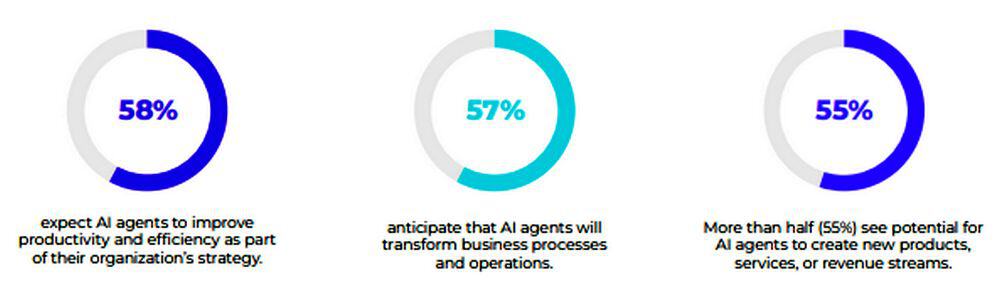
Looking ahead, adoption is expected to scale rapidly. More than half of respondents anticipate running at least five AI-enabled applications within three years, spanning generative AI, predictive analytics and autonomous agents.
For healthcare leaders, the message is clear: realising AI’s clinical and operational value will depend not just on adoption, but on rearchitecting infrastructure to support secure, compliant and real-time intelligence at scale.