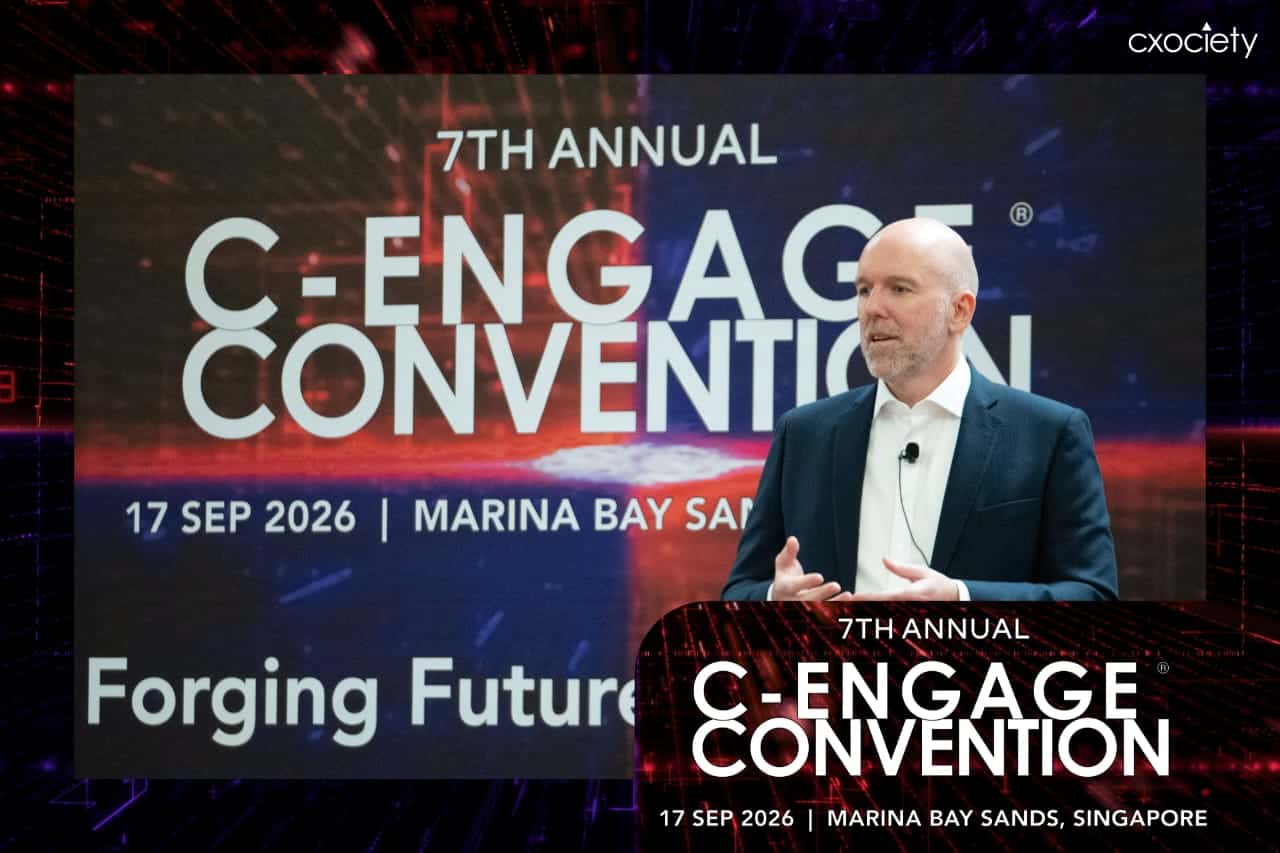
In today's landscape of fragmented regulation, legacy system constraints, escalating cyber risks and shifting geopolitics, transformation is no longer a one-off initiative—it is becoming the core operating model. For a global bank operating across 55 highly dynamic markets, this challenge is particularly acute.
This assessment aligns closely with industry trends. A 2025 report from Boston Consulting Group(BCG) notes that traditional banks face intense competition from fintechs and non-bank challengers, with legacy banks in several major markets carrying a cost-to-serve model up to ten times higher than that of challengers.
McKinsey research shows that fewer than one in three large-scale transformation programmes succeed, while a 2024 Bain survey found that only 12% of companies achieved their full transformation ambitions. These figures reveal a harsh reality: most transformation efforts fail to deliver lasting impact.
Transformation as strategy in motion
O'Neill reduces the purpose of transformation to four fundamental questions: "Are we investing in the right things? Are we delivering the value we expected? How is the organisation performing? And where should we intervene to make it better?"
The answers form the logic behind Standard Chartered's "Fit for Growth" programme. By 2025, that programme had delivered $754 million in run-rate savings through more than 300 initiatives, with underlying pre-tax profit rising 18% to $7.9 billion, record operating income of $20.9 billion and a return on tangible equity of 14.7%.
Yet O'Neill stresses that financial metrics are only part of the story: "Fit for Growth is very successful, but that's only one aspect of our transformation. The most important thing is improving turnaround times, client service and resilience."
This view is consistent with KPMG's research, which argues that cost optimisation is not about cutting for its own sake but about "building a smarter, leaner, future-ready organisation".
You cannot transform what you cannot see
One of O'Neill's central insights is both simple and powerful: "You cannot transform what you cannot see." Large organisations struggle with line of sight—financial data, process data, technology architecture, risk information, workforce data and investment portfolios are often viewed separately, making apparently simple questions surprisingly hard.
He shares a telling example. Taking over a struggling data centre migration, he called four CIOs into a room—no slides, no documents, just questions. Asked how many servers were in the data centre being migrated, the four CIOs gave four different answers. Worse still, some thought they were moving only one floor when, in fact, they were moving all of them.
The episode exposes a root cause of transformation failure: key programmes lack a shared or unified understanding of the work. O'Neill concludes that business architecture must become "a practical blueprint of how the organisation works," not mere documentation. This echoes McKinsey's research on banking in the age of agentic AI: without deep simplification, "up to $170 billion of the global profit pool could evaporate by 2030".
Connect the blueprint to performance
Architecture tells us how the organisation is meant to work; performance tells us how it is working. O'Neill asks: "If service times are deteriorating—where in the process is that happening? If cost is increasing—which capability is driving it? If there's a control problem—where does it originate?"
This is why static target operating models are not enough. Organisations need "living blueprints"—something management uses continuously, not every three years. KPMG's research backs this observation, emphasising the need for "stage-gated tracking, performance dashboards and change-management support" to ensure improvements stick.
Build it with the COOs
O'Neill is wary of solving the problem by creating another enormous central function. Instead, he stresses working with the COOs: "COOs own how their businesses operate. They sit across process, technology, people, cost, controls, operational performance—and increasingly AI orchestration."
Transformation's role is not to own every answer but to help the organisation make better decisions. This philosophy is borne out in Standard Chartered's practice. O'Neill has said elsewhere: "You can never sit in the centre and understand every process. The people closest to the work understand it best. We need to give them the tools to ask these questions and change them themselves."
Use the blueprint to make better investment choices
Most organisations know how much they spend. They can list programmes and RAG-rate them. But that does not tell them whether they are investing in the right things. Better questions are: "What capability does this investment strengthen? What outcome should improve? What legacy does it remove? Is someone else already building the same thing? Should this capability be built once for the enterprise?"
O'Neill recounts a story about how scarcity sharpens focus. A senior executive came to him with an urgent regulatory programme, claiming the backing of the CFO, CRO and Board Risk Committee, and insisting the requested budget was "the absolute bare minimum".
O'Neill said no—not because he enjoys saying no, but because the blueprint made clear they could not ramp from zero to that sum in the remainder of the year. Two days later, the executive returned with a revised estimate: about a third of the original amount.
This experience chimes with Gartner's 2026 CIO Agenda, which finds that 64% of technology executives plan to deploy agentic AI within the next 12–24 months. However, that success requires "an AI roadmap deeply aligned with the business, measurable value metrics, workforce upskilling and robust data governance".
Standardise where it gives leverage
O'Neill offers a clear framework for the standardisation-versus-localisation debate: "The question isn't 'global or local?' It's 'why is this different?'"
He points out that if the answer is regulation, customer need or genuine competitive differentiation, this is "fine". If the answer is simply history—three teams, three solutions—it should be challenged. "Standardise where it gives leverage. Differentiate where it creates value. Variation isn't bad. Unexplained variation is," he advised.
Standard Chartered operates in around 40 markets and has responded by "standardising as much as possible while allowing configurability to accommodate local regulations and requirements". This hybrid approach is evident in its core banking harmonisation work: consolidating systems onto a single version will "remove the need to develop capabilities repeatedly across multiple versions".
Redesign the work before deploying AI
O'Neill is cautious and pragmatic about AI. He warns of the danger of starting with the technology: "Where can we deploy AI? Where can we automate?" Instead, he suggests starting with a different question: "What is the work, and what is the best way to get it done?"
Brian O'Neill
"Once you understand the work end-to-end, you can eliminate, simplify, standardise, automate, augment—in that order. Automating complexity does not remove complexity." Brian O'Neill
He shares a cautionary tale. Standard Chartered implemented a machine-learning model to take out false positives in screening. The model was trained on agents' behaviour—how they made decisions, what they flagged, what they cleared. In testing, it was extraordinary: a million false positives, 99.99% accuracy, far better than the human equivalent.
But monitored over time, its accuracy plummeted every Friday afternoon. The reason: some agents took their foot off the gas on Fridays. The model observed that behaviour across multiple agents and concluded it must be logical—so it copied it.
"A perfect example of why you should never automate a flawed process. AI doesn't fix bad work. It learns it, scales it and accelerates it," reflected O'Neill.
McKinsey's research supports this: "AI transformation is not a technology transformation. The technology components—agents, the agentic layer—account for no more than 20% to 25% of the value. Most of the value requires significant shifts in operating model, data, talent, risk management and governance."
Move from allocating people to orchestrating work
O'Neill notes that AI is shifting the fundamental unit of work design. "Historically, we've designed organisations around roles and structures. AI shifts the unit of design to the work: What needs to happen? What skill does it require? What decision needs to be made? What can technology do? What should a person do? And how do we orchestrate all of that around the outcome?"
This is becoming a management capability, not merely a technology issue. McKinsey's observation aligns: "The new skill is articulating outcomes, not processes – declaring what you want, setting boundaries and measuring results."
The workforce evolves with the work
O'Neill insists we cannot redesign technology independently of work. "Skills are shifting. Work is shifting. Roles are shifting. The interesting question isn't jobs lost or jobs created. It's: What work should people keep doing because people are better at it? Judgement. Relationships. Complex decisions. Leadership. Challenge. Accountability."
Moody's 2026 Asia-Pacific banking survey shows that 42% of APAC banks are hiring senior data and AI leaders to drive change, compared with 31% in the US and 32% in Europe. Some 38% of APAC banks are driving cultural change to shift their organisations toward technology-led data businesses, compared with 32% in the US and 30% in Europe. This corroborates O'Neill's argument that the durability of transformation ultimately depends on people.
Bring it together as one management loop
O'Neill ties the whole framework into a single management loop: "Strategy → Blueprint → Performance → Investment → Work orchestration → People + Tech + AI → Performance → Repeat."
"Transformation shouldn't sit outside the operating model. It should become part of how the organisation manages performance and improves itself."
KPMG's research supports this, stressing the importance of "working in waves across the business—prioritising areas with the greatest impact potential—and ensuring end-to-end work across value streams, which not only accelerates value delivery but builds confidence and momentum for broader transformation".
Take aways
O'Neill closes with five succinct points:
First—invest in the right things and make sure they deliver value.
Second—understand how the organisation really works. Build a practical blueprint, not just another target-state document.
Third—connect architecture to performance. The interesting question isn't what the operating model looks like; it's whether it's working.
Fourth—redesign the work before you automate it. AI creates enormous opportunity, but automating complexity does not remove complexity.
And finally—build this capability into the organisation itself.
"Sustainable transformation isn't about doing more. It's about making better choices, executing them well, and building an organisation that gets better at improving itself—every day."
Allan is Group Editor-in-Chief for CXOCIETY writing for FutureIoT, FutureCIO and FutureCFO. He supports content marketing engagements for CXOCIETY clients, as well as moderates senior-level discussions and speaks at events.
Previous Roles
He served as Group Editor-in-Chief for Questex Asia concurrent to the Regional Content and Strategy Director role.
He was the Director of Technology Practice at Hill+Knowlton in Hong Kong and Director of Client Services at EBA Communications.
He also served as Marketing Director for Asia at Hitachi Data Systems and served as Country Sales Manager for HDS’ Philippine. Other sales roles include Encore Computer and First International Computer.
He was a Senior Industry Analyst at Dataquest (Gartner Group) covering IT Professional Services for Asia-Pacific.
He moved to Hong Kong as a Network Specialist and later MIS Manager at Imagineering/Tech Pacific.
He holds a Bachelor of Science in Electronics and Communications Engineering degree and is a certified PICK programmer.