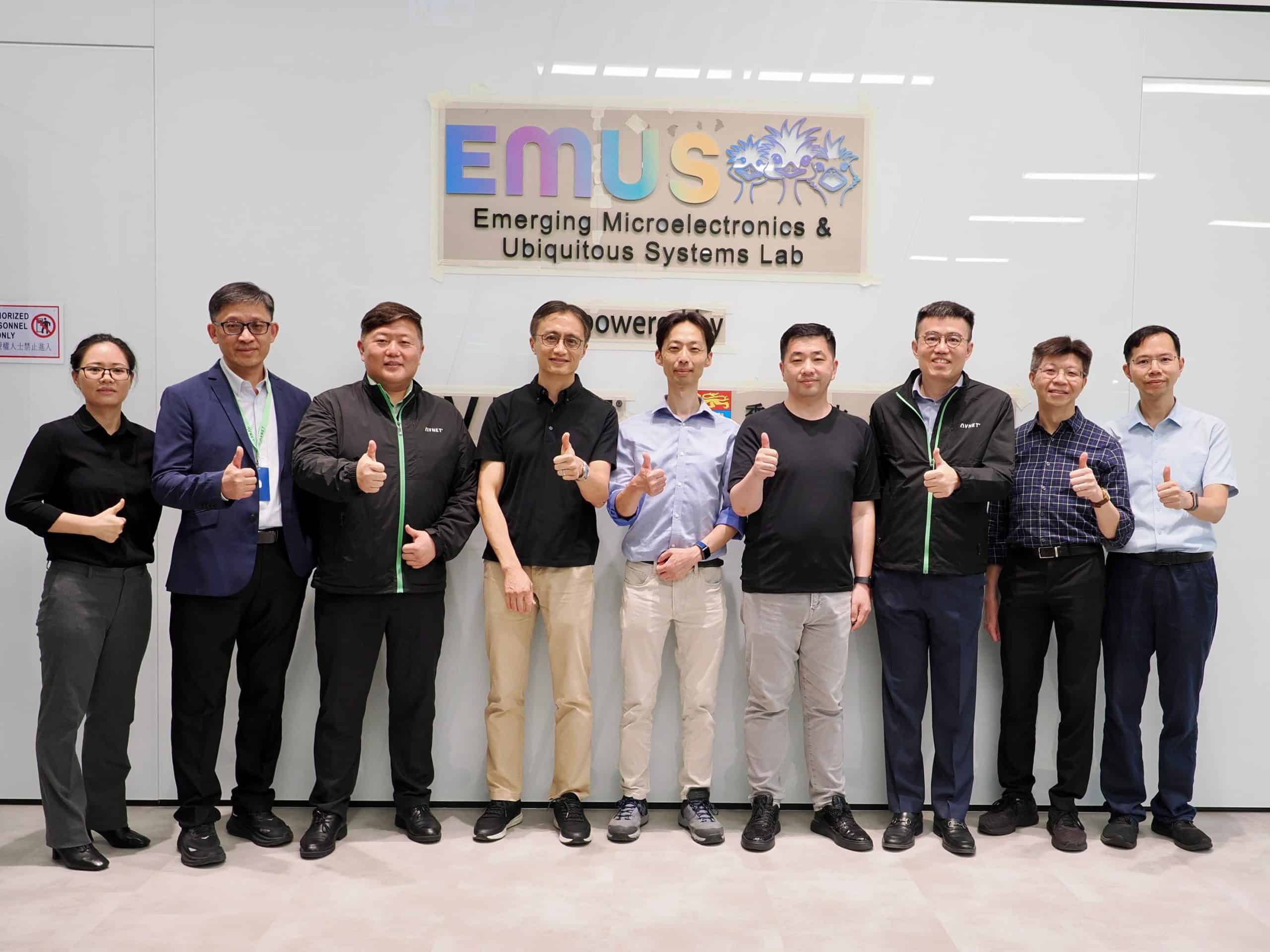
Avnet and The University of Hong Kong have officially opened the Emerging Microelectronics and Ubiquitous Systems Lab, or EMUS Lab, in a move aimed at accelerating the development and commercialisation of AI-enabled hardware in Hong Kong.
The collaborative innovation hub, located at the Data Technology Hub in Tseung Kwan O InnoPark, brings together academic researchers, start-ups and industry partners working on edge AI, physical AI, robotics, high-performance computing and emerging microelectronics.
EMUS Lab is designed to help innovators overcome one of the most persistent challenges in deep technology: moving from a promising prototype to a reliable, manufacturable and scalable product. Through the facility, developers can access engineering consultation, GPU computing resources, prototyping support, manufacturability assessments and supply chain expertise.
Avnet said its wider ecosystem, including element14, will support early-stage proof-of-concept development and prototyping. The company will also provide engineering, design-chain and global supply chain capabilities to help innovators progress from product development to production.
“Building a great AI model is only the beginning,” said Arthur Chung, vice president, Sales and Supplier Management, Asia, Avnet. “Turning AI innovation into a reliable, manufacturable and scalable product remains one of the biggest barriers to commercialisation.”
Chung added that EMUS Lab was created to help innovators bridge that gap by combining research with engineering expertise, supply chain readiness and market access.
The facility is being established as AI moves increasingly beyond cloud-based applications into intelligent devices, robots and industrial systems. The partners said this shift requires more than advanced software models; it also depends on the ability to design, engineer, manufacture and scale specialised hardware.
Prof. Ngai Wong, associate professor at HKU’s Department of Electrical and Computer Engineering and Director of EMUS Lab, said the facility was intended to connect cutting-edge research with real-world applications.
“By bringing together researchers, students, start-ups and industry partners, we are creating an environment where research excellence, engineering expertise and industry needs converge to accelerate AI and microelectronics innovation,” he said.
The lab has already supported research using Avnet-sponsored GPU infrastructure. The resulting work has contributed to publications in Nature family journals and presentations at AI conferences including ICLR and ICML, according to the announcement.
A key industry initiative is the 12-month DfMA Launchpad for AI MMP Programme, a co-incubation programme involving EMUS Lab, Avnet and Hong Kong Science and Technology Parks Corporation. It offers technical mentorship, hardware-software co-design, system validation, manufacturability guidance and industry connections. Twenty-seven start-up teams have been selected to participate.
The partners said EMUS Lab will support applications spanning healthcare, robotics, industrial automation, smart living and smart cities, while strengthening Hong Kong’s role in AI hardware innovation and technology commercialisation.