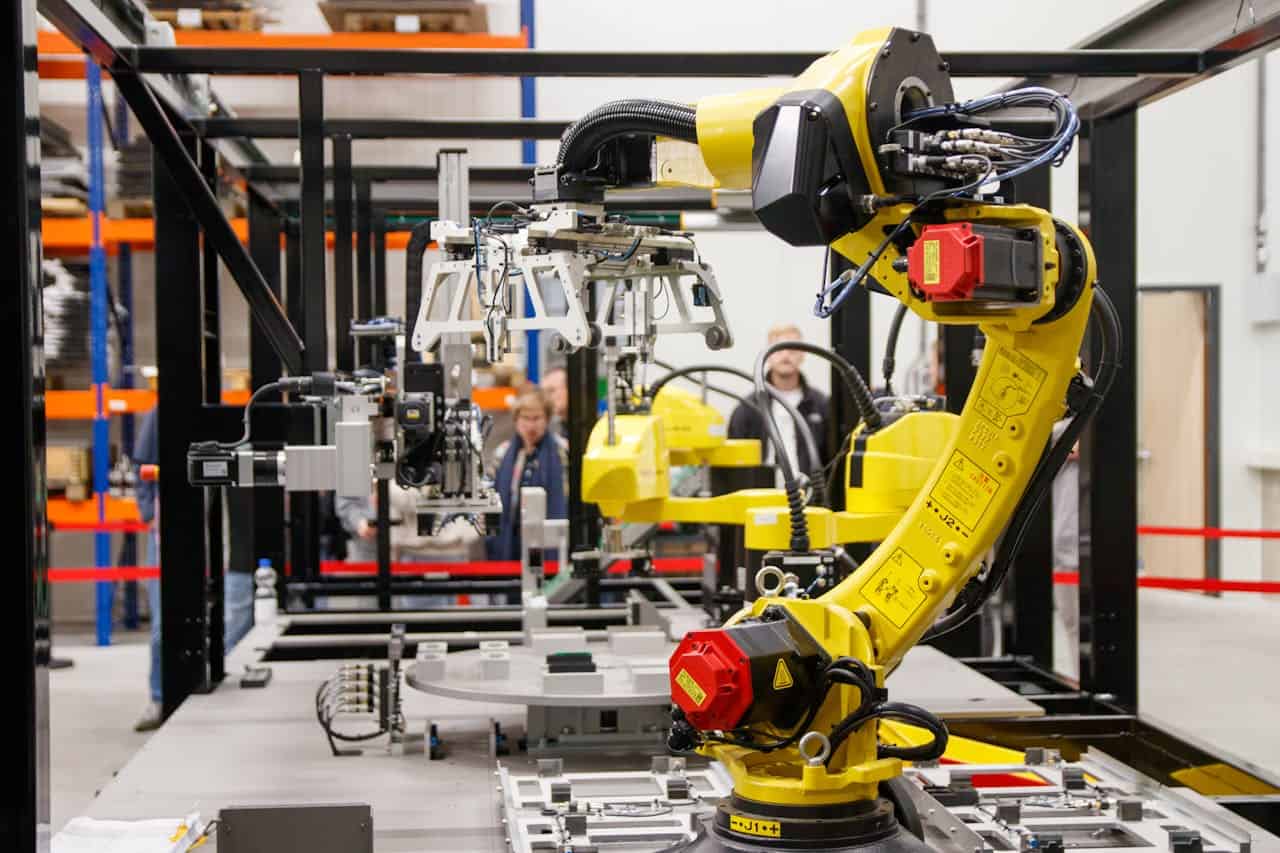
The global Yield Optimization for Manufacturing AI market is moving from niche industrial use into a major growth segment, with market value expected to rise from US$3.2 billion in 2024 to US$24.7 billion by 2033, according to Growth Markets.
The growth story is being driven by manufacturers’ need to lift throughput, reduce waste, and make faster decisions on the factory floor.
Market momentum
Yield optimisation refers to maximising saleable output from manufacturing inputs while cutting defects, downtime, rework and scrap. What once depended on operator experience, periodic inspections and statistical process control is now being reshaped by AI, which can analyse production data in real time and recommend or even trigger adjustments.
The market’s projected 22.4% CAGR from 2025 to 2033 reflects how quickly manufacturers are adopting these capabilities to improve profitability without necessarily expanding plant capacity.
The strongest demand is coming from sectors where quality is non-negotiable. Aerospace, healthcare devices and automotive components all require tight tolerances and low defect rates, making AI-based monitoring and predictive control especially valuable.
AI systems can detect micro-anomalies early in the process, improving first-pass yield and reducing the risk of recalls, reputational damage and regulatory exposure.
Why adoption is rising
Rising labour costs, volatile energy prices and expensive raw materials are pressuring manufacturers to do more with less. AI yield optimisation tools help companies squeeze greater value from existing assets, which makes them attractive even in capital-constrained environments.
Industrial IoT is also expanding the addressable market: connected sensors, machine vision and smart equipment are generating the data streams that AI models need to learn and optimise.
Workforce shortages are another accelerator. Many factories lack enough experienced technicians and process engineers, so AI is increasingly used to capture expert knowledge, automate routine monitoring and support less experienced staff. In this sense, the technology is becoming both an efficiency tool and a knowledge-preservation layer.
Barriers to scale
Despite the outlook, several obstacles remain. Many legacy factories still rely on fragmented systems and inconsistent data formats, which makes reliable AI performance difficult.
Upfront costs for sensors, connectivity, software and training can also be significant, particularly for smaller manufacturers. Resistance to change can slow adoption too, as plant teams may be wary of automated recommendations.
On top of that, increased connectivity brings greater cybersecurity risk, especially for operational technology networks and production data.
What comes next
The next phase of growth is likely to move beyond advisory AI into semi-autonomous and eventually fully autonomous optimisation systems. Self-learning production lines that continuously adjust parameters to maximise yield are already becoming the direction of travel.
Sustainability will also push adoption further, because reducing scrap, water use, energy consumption and excess material waste supports both cost control and ESG goals.
Generative AI may add another layer by helping engineers interpret data, design experiments and create optimisation scenarios through natural language interfaces.