
Talent shortages are now the single biggest constraint facing technology leaders, according to the 2026 Reveal IT Talent Survey from Infragistics.
The research shows that artificial intelligence, cybersecurity and data analytics roles are among the most in‑demand, while gaps in AI‑ and data‑driven skills are limiting what organisations can execute at scale.
AI‑driven roles dominate hiring
Eighty per cent of technology leaders report using AI in software development in 2025, and 77% have made expanding AI use a top strategic priority for 2026.
That shift is creating new roles: 48% of organisations say AI adoption has led to new positions, versus just 18% reporting AI‑related layoffs. Hiring staff with AI skills was a priority for 89% of organisations in 2025 and has risen to 91% in 2026, and two‑thirds of firms that improved productivity in 2025 attribute those gains to AI integration.
“These shortages reflect the complexity of modern technology environments now that AI is part of everyday software development,” said Casey Ciniello, Reveal and Slingshot senior product manager at Infragistics. “Organisations are discovering that adopting AI is easier than finding the people who know how to build, deploy and secure it.”
Hard‑to‑fill roles and senior‑level preference
AI engineers top the list of hardest‑to‑fill roles (39%), followed by cybersecurity engineers (38%), with cloud engineers and data analytics professionals not far behind.
Only 7% of technology leaders say they face no hiring difficulties, underscoring the breadth of the talent gap. AI‑related concerns around ethics, governance and security are also growing, with half of respondents flagging responsible AI use as a major challenge and 48% pointing to security and privacy risks.
As a result, organisations are seeking professionals skilled in data privacy, bias mitigation, explainability and secure AI deployment, and are increasingly focusing on senior‑level hires; 70% of respondents plan to prioritise senior talent over entry‑level, especially in AI‑heavy environments.
Data, analytics and Python as key drivers
Beyond titles, the survey highlights in‑demand skills. Python is cited by 56% of organisations, reflecting its role in AI, automation and data science, followed by AI and machine learning (47%), Java (34%) and cybersecurity (33%) [Reveal IT Talent Survey 2026].
“The demand for AI and Python expertise is growing faster than the talent pipeline can supply it,” said Jason Beres, COO of Infragistics. “Organisations aren’t just looking for coders anymore. They need engineers who understand data, automation, and AI systems. The real competitive advantage is access to skilled talent.”
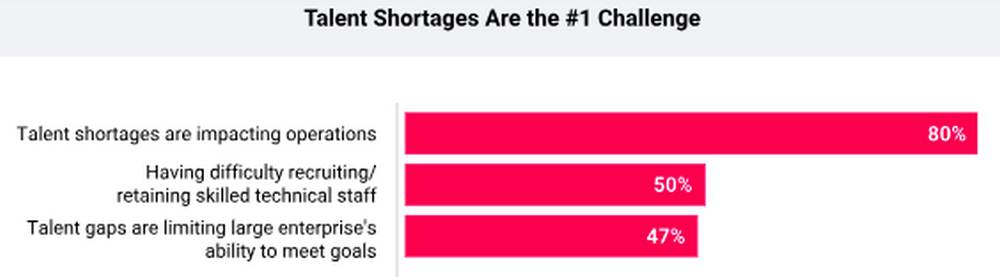
Fifty per cent of technology leaders report difficulty recruiting and retaining skilled staff, and 80% say talent shortages are already affecting operations, with large enterprises especially constrained in meeting business goals.
Analytics embedded in operational workflows
Data and analytics are also rising in strategic importance. Eighty‑five per cent of organisations use business intelligence tools, and 84% expect to increase their focus on analytics in 2026, with 76% deploying embedded analytic capabilities inside applications.
“Analytics is no longer confined to dashboards. They are being embedded directly into the applications people use every day,” said Ciniello.
“That shift is driving demand for professionals who can connect data pipelines, analytics, and user experiences inside operational systems.” Casey Ciniello