Fleet management has evolved from simple tracking to data-rich, analytics-driven platforms, and the pace of innovation is accelerating.

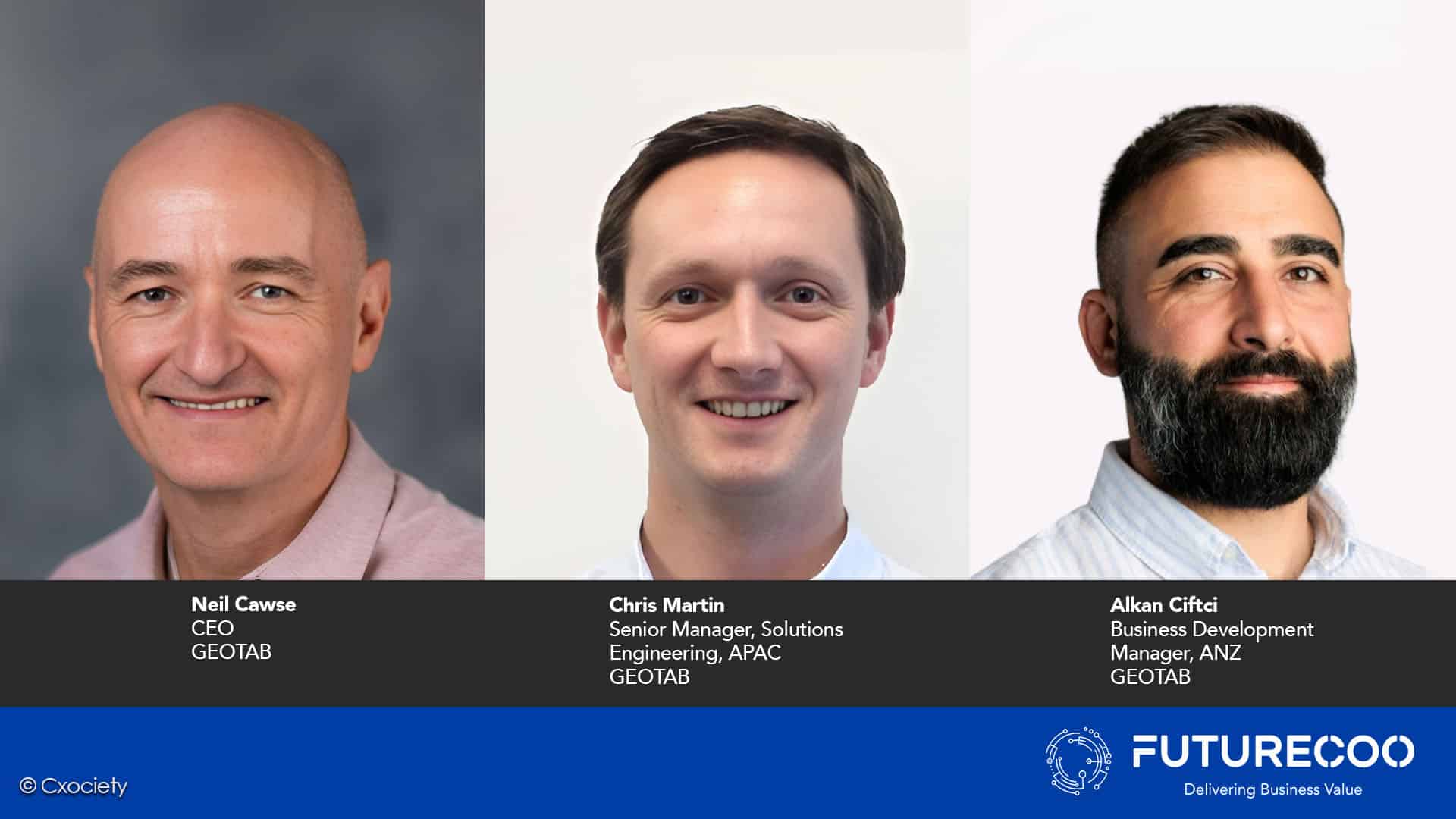
Asked what the next phase looks like, Geotab CEO Neil Cawse said, "It's going to be a very interesting time."
With autonomy, AI, and connectivity converging, Cawse said there is no other strategy but readiness and adaptability.
"We have a choice. We can stand on the sidelines and watch the world transform around us. Or we can get onto that rollercoaster, ride it, grab the bar, ride it, do everything you want," he said.
We have a choice. We can stand on the sidelines and watch the world transform around us. Or we can get onto that rollercoaster, ride it, grab the bar, ride it, do everything you want. Neil Cawse
Technologies in the new era

Chris Martin, senior manager, Solutions Engineering, APAC at Geotab, says that data has always been central to fleet operations, but the real challenge lies in extracting actionable insights at speed.
"AI is bridging that gap from the volumes of data that we kind of knew what to do with some years ago, but now AI can bridge that gap to speed up the time to driving an insight and therefore make decisions fast," he said.
Rather than replacing human judgment, he sees AI as surfacing patterns that may previously have gone unnoticed.
With AI's ability to bridge the gap between data and insights, the new era of fleet management technology also delivers faster insights, better decisions, enhanced operational efficiency, and improved safety. With innovations, such as having the ability to discuss data with a natural language chatbot, AI is humanised and acts as an intelligent assistant.
But transformation goes beyond data analytics.

Alkan Ciftci, business development managerat ANZ, Geotab, says the new era of fleet management technology involves moving toward a combination of telematics and video.
"These two technologies have existed separately for a long time, but now, combining the context from the video, from dash cams, and combining that with the telematics data and the engine data, it gives the whole story of what happened. It's not a video without all the extra engine information."
He adds that the powerful combination improves safety, efficiency, and risk identification.
"I see the AI within the video technology helping businesses be even safer and, through that, be more profitable," he says.
The human-machine balance
Despite the significant role of AI and automation in fleet management, Ciftci emphasises that matching policy to outcomes still requires human intervention.
"With anything, any of the setup on what we're asking the AI and how we're asking the AI to surface our outcomes is still going to be human-driven. It will still be the humans within the organisation making sure the questions and prompts are relevant to the outcomes they want, not time-wasting or drowning in just using the AI because it's there. It needs to be aligned to the objectives," he clarified.
Martin agrees and urges caution in adoption, advising the organisation to "Take it one step at a time."
He said that, depending on an organisation's maturity, human oversight and AI accuracy should be considered.
Different approaches to AI can adopt different levels of sensitivity. Alkan Ciftci
"Different approaches to AI can adopt different levels of sensitivity. I guess it's a risk sensitivity to your own business as to how much you want to rely on the AI versus not, and the right technology stack will let you control those elements to a degree," he adds.
Another question also matters: How do we use AI to add value to what we're doing?
Common modernisation mistakes
Amid the ever-evolving innovations in fleet management, some mistakes hold companies back from truly experiencing transformation.
"The biggest mistake would be systems being in silos and not having open architecture between their fleet telematics," shared Ciftci.
Additionally, a lack of proper benchmarking tools can hold organisations back.
"The mistake would be like having a simple or a single platform like a telematics platform that's not connected and then creating additional work based on that," he said.
For Martin, the most common issue he observed in the industry is stakeholder engagement. He explained: "That's about getting the right stakeholders, making sure they've got the right buy-in to the adoption of technology.”
In fleet management, it is vital to bring drivers on the journey of transformation so they can appreciate the value of the technology they are adopting.
If a driver can understand why the tech is helping that way, then I think it's always going to be a much more successful outcome. Chris Martin
"I find that changes the game in terms of the speed of adoption and how successful that implementation project is if you can get the drivers on board. If a driver can understand why the tech is helping that way, then I think it's always going to be a much more successful outcome," he said.
The future of fleet management
Ciftci projects that AI acceleration across features will lead to a dramatic increase in the efficiency of turning data into decisions and outcomes.
" I think we'll see a lot more connected infrastructure as well. We can start to see telematics and how this impacts technologies like vehicle-to-grid and vehicle-to-vehicle, as we'll have more connected devices with higher capabilities that can work in interconnected systems like smart cities," he said.
According to Martin, AI will always be part of the picture but organisations need to underpin it with the right technology stack, open platforms data.
"Picking technology that has the future in mind about its open architecture or providers that are embracing AI already is really important. Lining up the tech stack that you're embracing in your business, but then, without a doubt, familiarity with AI tools, how to leverage that into the business, and it will turn from sort of an AI assistant for the individual into being a more critical part of the business where AI starts to drive operational decisions with human oversight," he said.
Keeping a promise
Every vehicle carries something more important than cargo. Neil Cawse
In a keynote speech at the recent Geotab Connect in Las Vegas, Cawse framed AI not as a disruption but as a partnership.
"We're bringing AI back to people, not as a threat, but as a partner," he said.
The goal, he explained, is to simplify workflows, provide real-time insight and support faster, safer decision-making on the road.
But ultimately, the technology serves a deeper purpose.
"Every vehicle carries something more important than cargo," Cawse said.
It carries a person, a parent, a partner, someone who's promised they'll be home soon. The promise, he said, is the true north of fleet innovation.