
A recent McKinsey survey shows that while a significant 70% of white-collar workers in Hong Kong actively engage with AI tools on a daily basis, only 25% implement AI across entire workflows.
Compounding this issue, an alarming 14% of executives utilise AI frequently, starkly contrasting with their employees, who report usage rates 4-5 times higher.
The case for AI in productivity
According to the survey, 88% of respondents who use AI noted improvements in their productivity. For many, this translated into practical time savings; one in five reported gaining over an hour each day through AI-assisted tasks.
Yet, the data reveals a critical disconnect: although AI is viewed as a powerful augment for productivity, senior leadership appears cautious or uninformed about its potential benefits.
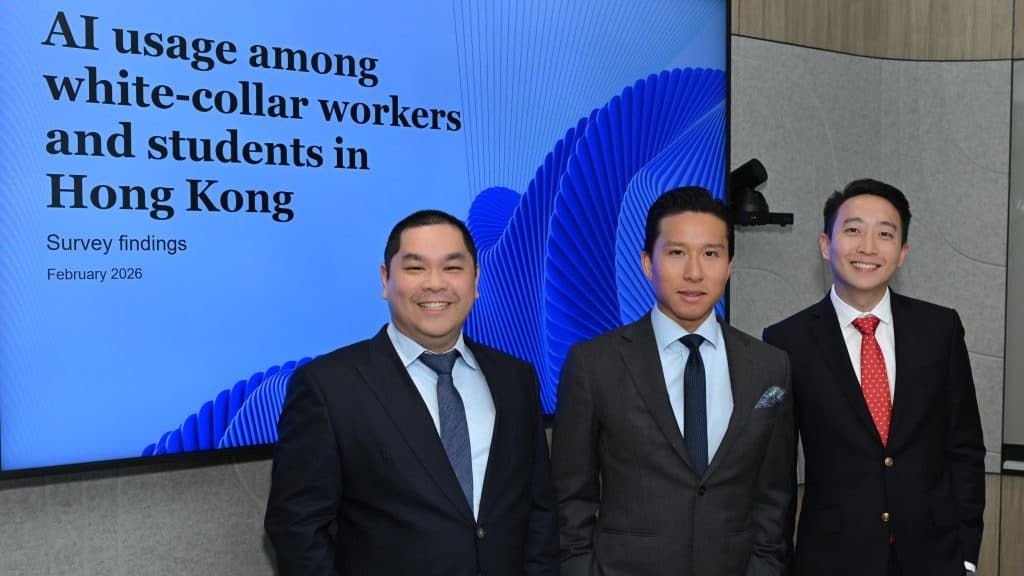
McKinsey’s Hong Kong office (middle) and James Bien, engagement manager of McKinsey’s Hong
Kong office (right)
Jackey Yu, a partner at McKinsey’s Hong Kong office, emphasised the importance of aligning corporate strategy with AI adoption, stating that “the workforce of the future is already here.”
Bridging the gaps
The study highlights two significant challenges that Hong Kong companies must overcome to fully realise AI's capabilities. Firstly, there is a stark seniority adoption gap.
While junior and mid-level employees are leveraging AI extensively for tasks like data analysis and content creation, top executives remain largely disengaged. This leadership gap represents a strategic vacuum that companies cannot afford to ignore.
Commenting on the urgency of this situation: "Hong Kong has built an emergingly AI-ready workforce, but only 14% of executives are keeping pace. The opportunity is clear—but so is the leadership gap," says Arthur Shek, managing partner at McKinsey.
Secondly, persistent cybersecurity and data privacy concerns continue to be the predominant barriers to wider AI adoption. Data security remains a priority across various sectors, as it impacts trust and operational capabilities. Companies must therefore implement robust governance strategies that facilitate secure AI integration rather than impose blanket restrictions that stifle innovation.
Youthful perspectives on AI integration
The looming generational shift adds another layer to this narrative. The survey reveals that 73% of students are inclined towards AI-enhanced careers, with 93% actively seeking skills relevant to this future.
This eagerness presents both a challenge and an opportunity for organisations in Hong Kong. To attract young talent, companies must redesign their talent strategies to encompass AI fluency alongside traditional skills. Yu noted, “Companies that don’t adapt will struggle to attract and retain this next generation.”
Strategic priorities for transformation
To bridge these gaps and harness AI's potential, McKinsey outlines several strategic priorities:
- Align AI with Business Strategy: AI should serve clear, defined business objectives rather than function as a standalone initiative. Engaging senior leaders in this strategy is crucial.
- Treat AI Integration as a Business Transformation, Not an IT Project: Active ownership from senior leadership is vital for embedding AI into everyday workflows.
- Focus on Foundational Process Improvements: Before venturing into cutting-edge applications of AI, organisations should use it to enhance existing processes, thereby building organisational confidence.
By focusing on these tactical steps, Hong Kong firms can position themselves for substantial competitive advantages in an increasingly digital marketplace. The research suggests that addressing the security landscape in conjunction with executive engagement will be essential for transforming AI from a mere concept into a core strategic asset.
In conclusion, while the potential for AI to enhance productivity within Hong Kong's workforce is clear, companies need to act decisively.
Establishing a culture of AI fluency, enhancing governance frameworks, and nurturing an innovative environment will secure the talent and operational prowess necessary for thriving in the future.
The path forward is not just about leveraging technology—it's about embedding a transformative mindset across all levels of the organisation.