A recent survey by Gartner revealed that 55% of supply chain leaders believe advancements in agentic AI will lead to a decreased need for entry-level hiring. Furthermore, 51% anticipate that this technology will contribute to overall workforce reductions.
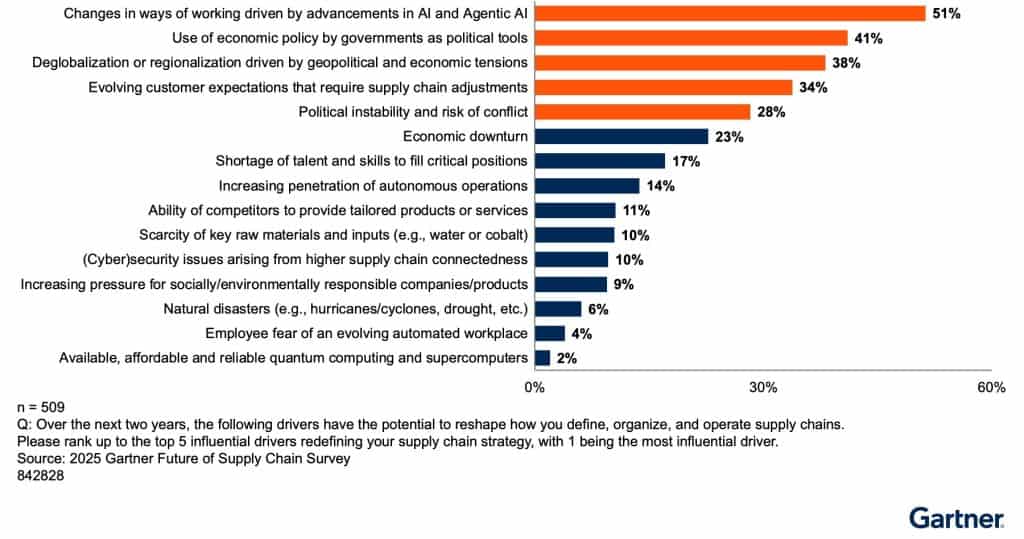
The survey, conducted with 509 supply chain leaders from various industries between July and October 2025, indicates a transformative outlook on workforce dynamics.
While opinions on the impact of agentic AI on headcount plans remain mixed, a substantial 86% of respondents agree that its adoption necessitates new processes for developing talent pipelines.
Source: Gartner
This reflects a pivotal shift in how supply chain organisations will approach skills development and talent utilisation.

“The highest performing supply chain organisations are using AI to reinvent how work gets done and how talent is developed," said Marco Sandrone, VP analyst in Gartner’s Supply Chain practice. "They are not treating AI as a blunt instrument for headcount reduction.”
For Chief Operating Officers (COOs) in Asia, this signals a critical opportunity to rethink workforce strategies as the region navigates rapid technological advancement.
The report highlights that changes driven by AI advancements are anticipated to be the single most influential factor redefining supply chain strategies in the next two years. This shift underscores the essential need for human-machine collaboration in operations.
High-performing organisations that have effectively integrated agentic AI have demonstrated significant improvements in performance metrics such as customer lead time and revenue growth.
These leaders are prioritising talent strategies that focus on upskilling current employees for the AI era, utilising AI-enabled tools for enhanced workforce planning, and increasing automation to reduce dependency on manual labour.
“Entry-level roles as understood today may fade in importance, but supply chains will still require emerging talent that is highly adaptive and innovative,” explained Sandrone.
As COOs in Asia prepare for these impending changes, the focus on agility, adaptability, and reskilling will be critical for maintaining competitive advantage and operational efficiency in a rapidly evolving landscape.