In 2025, AI is reshaping the COO's mandate across Asia, shifting focus from process efficiency to strategic orchestration. According to McKinsey (2024), 68% of APAC operations leaders report AI-driven automation freeing up 20–30% of planning capacity, enabling greater emphasis on resilience and innovation.
Accenture highlights that AI-powered predictive operations are now table stakes in manufacturing and logistics hubs like Vietnam and Singapore.
However, Gartner cautions that only 35% of Asian firms have mature data governance to support enterprise AI at scale.
For COOs, the imperative is clear: integrate AI into core operational workflows while navigating talent gaps and ethical AI frameworks unique to Asia's fragmented regulatory landscape.
Defining AI: Beyond the buzz in Asian markets
2026 is expected to see these trends accelerate further, with AI automation not just optimising costs but also enabling entirely new business models.
In Asia, where digital adoption outpaces many regions, AI is often viewed through the lens of practical value rather than novelty.
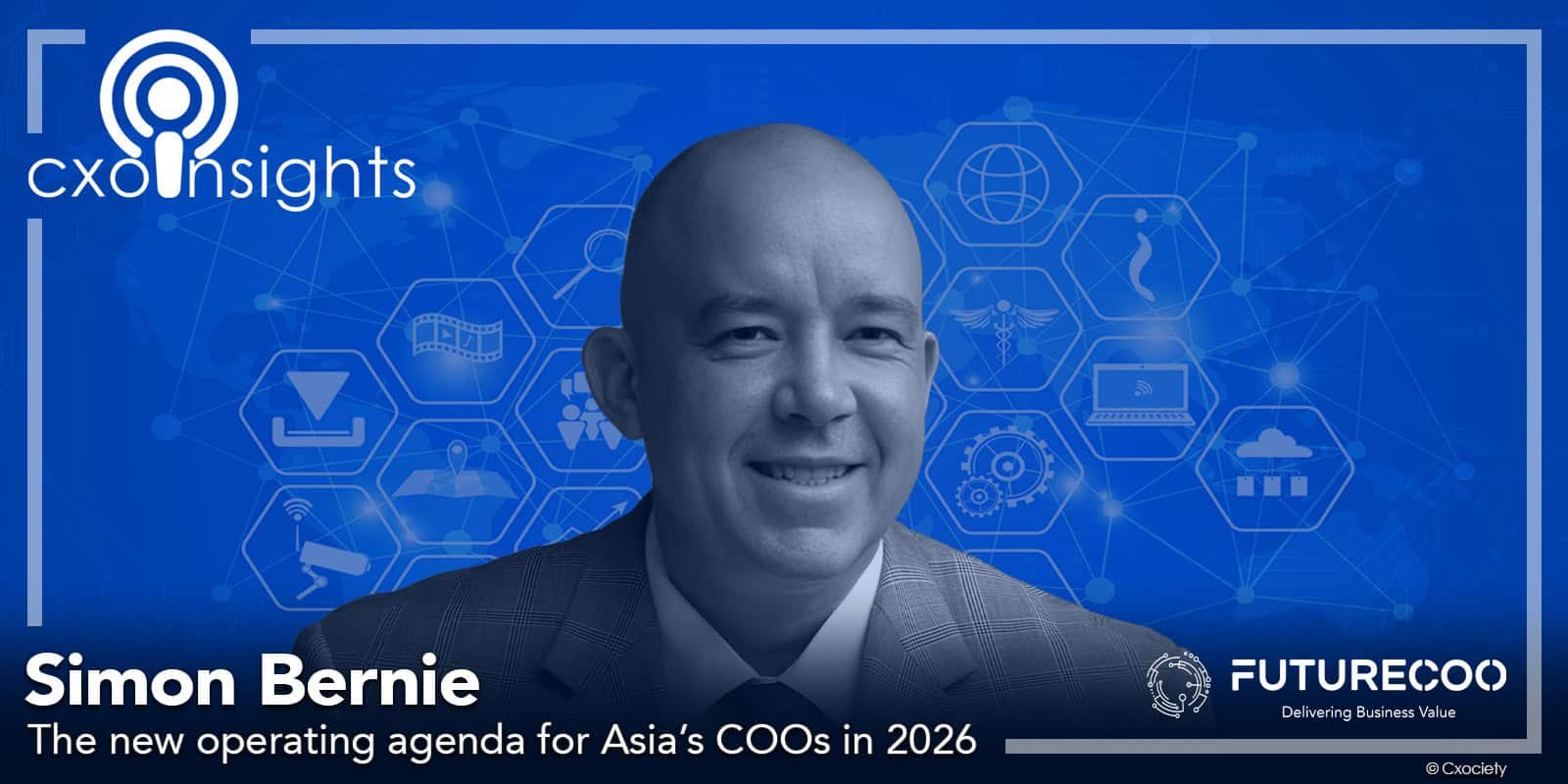
Simon Bernie, senior vice president and head of global alliances at Teceze, emphasises a holistic view: "When we talk about AI, we are really talking about a collection of technologies coming together to enable new ways of doing business. While generative AI receives most of the attention, the real and lasting value comes from machine learning, intelligent automation, advanced analytics, and rule-based decision systems."
This definition resonates amid 2025-2026 trends, where AI adoption in Asia-Pacific has surged. McKinsey's latest State of AI report reveals that 78% of organisations now use AI in at least one business function, with 71% deploying generative AI—a marked increase from 65% in early 2024.
In Southeast Asia, enterprise AI adoption has accelerated, with 23% of businesses fully integrating it to gain a competitive advantage, particularly in education, marketing, and healthcare. For COOs in dynamic markets like India and Indonesia, this means focusing on AI's "less visible components" that drive "meaningful, positive change," as Bernie notes.
With fewer legacy systems hindering progress, Asian organisations are poised to leapfrog, turning AI into a revenue enabler rather than a cost cutter.
Redefining the COO's strategic role in Asia
Historically, COOs in Asia have prioritised efficiency in high-growth, labour-intensive environments. AI is upending this. Bernie observes that Asian organisations are often faster to adapt because many did not overinvest in legacy systems. This makes the transition to AI-enabled models more straightforward.
"Historically, COOs focused on cost optimisation, repetitive processes, and efficiency gains," notes Bernie. "AI changes this dynamic by accelerating time-to-value. Automation removes manual and repetitive work, allowing existing teams to focus on higher-value activities."
This shift aligns with regional trends. Accenture's Technology Vision 2025 predicts that generative AI will drive 20% productivity gains among leading AI adopters, particularly in manufacturing and logistics.
In hubs like Vietnam and Singapore, AI-powered predictive operations are essential, optimising supply chains and reducing disruptions. Gartner forecasts that by 2026, 70% of Asia-Pacific organisations will see AI disrupt business models within 18 months, emphasising agentic AI for autonomous execution.
For operations heads, this means evolving from overseers of processes to architects of agile, AI-infused ecosystems. Bernie adds: "This shifts operations from being a cost centre to becoming a value and revenue enabler. AI enables productivity gains without proportional increases in headcount, which is particularly important in tight labour markets."
Aligning operations with enterprise AI strategy
As CEOs increasingly own AI strategy in Asia-Pacific, COOs must bridge the gap to execution. Bernie stresses that the COO plays a critical role in translating AI strategy into operational reality. "First, leaders must separate genuine business value from hype. AI should be applied to solve real operational problems, not as a novelty," insists the Teceze executive.
Data governance remains a hurdle, with Gartner's 2025 trends noting that the rise of generative AI strains efforts, and only a minority of firms are prepared. Bernie is adamant that data strategy is foundational.
"If data is not clean, structured, and governed, AI will not deliver meaningful outcomes. Interestingly, we are seeing a shift where organisations moved from unstructured to structured data and now need to re-enable unstructured data to extract value through AI." Simon Bernie
To align KPIs, Bernie advises COOs to evolve KPIs toward outcomes and OKRs (methodology) that reflect value creation rather than activity tracking. "Visibility is essential. In many organisations today, leadership still lacks real-time insight into operational performance. AI can close that gap if governance and measurement are designed correctly," he continues.
Identifying quick wins is key in Asia's competitive landscape. Supply chains are a prime example, calls out Bernie: "Logistics data is traditionally siloed across transport modes, vendors, and systems. AI enables organisations to connect these silos without years of complex integration."
"The result is real-time visibility for customers. They know where products are, when they will arrive, and what risks exist. That level of transparency is now essential for customer trust."
This is evident in trends where AI in logistics is projected to grow rapidly, with Asia-Pacific leading in autonomous warehousing and predictive maintenance, according to Accenture.
Bernie also points to financial services: "In financial services, AI-enabled KYC has transformed onboarding. Tasks that previously took long phone calls can now be captured automatically, with humans validating the results."
In customer service, he believes that "AI receptionists and virtual agents ensure consistent availability while freeing humans to handle complex issues."
Another area he sees benefiting from AI is in compliance and accounting. "Accounting principles have remained stable for decades. Applying AI to these structured, repetitive processes dramatically accelerates execution while reducing errors."
UiPath's 2026 trends report underscores the role of agentic automation in reshaping workflows across industries.
Emerging operating models and human-AI collaboration
AI blurs traditional boundaries, demanding new models. Bernie advises: "AI must be embedded into the business model, not bolted on. Adoption is critical. The more people use AI tools effectively, the greater the organisational value."
He explains that, unlike traditional ERP deployments that take years, AI solutions can deliver value quickly. "This requires COOs to embrace agility, experimentation, and fast iteration. Organisations can pivot faster, respond to market changes, and continuously improve operations," he elaborates.
On collaboration, he stresses the importance of lifelong learning. "No one can rely on a single skill for an entire career anymore," he posits. He uses Teceze to illustrate his point: "We started by documenting what teams do day to day. Many tasks are repetitive regardless of scale. Automating these allows teams to grow revenue without doubling headcount.
"Our people are learning how to work as human-in-the-loop operators. They validate AI outputs, refine processes, and apply judgment where it matters. The goal is not job loss, but value creation. AI enables consumer-grade responsiveness inside enterprise environments," he continues.
In Asia, where talent shortages loom, Accenture notes that AI agents are coordinating logistics to cut costs and reduce delays.
Structuring partnerships and evaluating investments
Bernie recommends balance pointing out that large vendors provide stability and risk assurance while smaller, specialised partners provide speed and innovation. The key is balance, he believes.
Simon Bernie
"Large enterprises should use established vendors for core platforms, while leveraging nimble partners for rapid development and experimentation. Many successful AI projects start as small proofs of concept that scale into production. An ecosystem approach reduces lock-in and accelerates innovation." Simon Bernie
Amid budget constraints, leaders must understand effort versus value, according to Bernie. "I have seen solutions built in days that others priced at tens of thousands of dollars. COOs need to ask hard questions. How long does it really take? What infrastructure is required? Are we solving a decision-making problem or simply generating more data? AI accelerates organisations that are ready to decide. For those unwilling to act, AI can actually slow progress. Capital allocation should focus on time-to-value, not technical novelty."
Recommendations for 2026
According to Bernie, Teceze positions itself across five pillars.
"First, cybersecurity with AI embedded across threat detection and response. Second, field service automation to match the right resources to the right tasks. Third, digital workplace solutions that improve end-user productivity. Fourth, managed services driven by predictive AI. Fifth, secure sourcing and procurement as a service, powered by agentic AI."
He notes the function's potential: "Procurement is a major opportunity. Gartner predicts that the majority of organisations will outsource procurement due to talent shortages, potentially saving up to 25 per cent. AI enables these savings faster and more sustainably."
For COOs in 2026: "For COOs, the mandate for 2026 is clear. Build AI literacy across the workforce. Establish strong data foundations. Focus on quick wins that compound into an ecosystem of agility and resilience," he concluded.
By 2026, Asia will lead AI innovation exports, according to Frontier Enterprise predictions, and operations leaders must act decisively to harness automation's full potential. The future belongs to those embedding AI deeply, turning operations into engines of growth.
Click on the PodChats player to listen to the details of the dialogue with Bernie.
Define AI as viewed from the perspective of the COO.
How is AI redefining the strategic scope of the COO beyond traditional operational efficiency in Asian organisations?
In organisations where CEOs increasingly own AI strategy in Asia Pacific, how can COOs ensure day-to-day operations, processes, and KPIs stay tightly aligned with that strategy, including their role in cross-functional AI governance and enterprise-wide AI scaling?
Which high-value operational domains in Asia offer the most significant near-term returns from generative and agentic AI, and how should COOs prioritise them, including which industries are leading in AI-driven operational transformation?
What new operating models are emerging as AI blurs the lines between planning, execution, and decision-making, and how should the COO mandate evolve when AI and automation become core to the business model in Asian markets?
How can COOs redesign operating models to integrate "digital labour" and AI agents alongside human teams, including how leading Asian firms are reskilling operations talent to work effectively alongside AI systems while addressing employee job fear and skills gaps?
What new leadership, data, and AI literacy capabilities must operations leaders and middle management in Asia develop to manage AI-augmented teams effectively?
What governance frameworks are needed to ensure responsible, ethical AI use in operations, aligned with Asia's diverse regulatory and ethical standards on data privacy, security, model risk, transparency, fairness, and brand trust?
What metrics beyond cost savings should COOs adopt to measure AI's impact on resilience, service quality, growth, and overall business value in Asia's volatile markets?
How should COOs structure partnerships with consulting firms and technology providers to accelerate AI-enabled operations without creating long-term vendor lock-in?
Given constrained budgets and competing priorities for 2026, what capital-allocation and business-case criteria should COOs apply to scale AI in operations while avoiding hype-driven investments and addressing pressing data governance and infrastructure gaps?
Allan is Group Editor-in-Chief for CXOCIETY writing for FutureIoT, FutureCIO and FutureCFO. He supports content marketing engagements for CXOCIETY clients, as well as moderates senior-level discussions and speaks at events.
Previous Roles
He served as Group Editor-in-Chief for Questex Asia concurrent to the Regional Content and Strategy Director role.
He was the Director of Technology Practice at Hill+Knowlton in Hong Kong and Director of Client Services at EBA Communications.
He also served as Marketing Director for Asia at Hitachi Data Systems and served as Country Sales Manager for HDS’ Philippine. Other sales roles include Encore Computer and First International Computer.
He was a Senior Industry Analyst at Dataquest (Gartner Group) covering IT Professional Services for Asia-Pacific.
He moved to Hong Kong as a Network Specialist and later MIS Manager at Imagineering/Tech Pacific.
He holds a Bachelor of Science in Electronics and Communications Engineering degree and is a certified PICK programmer.