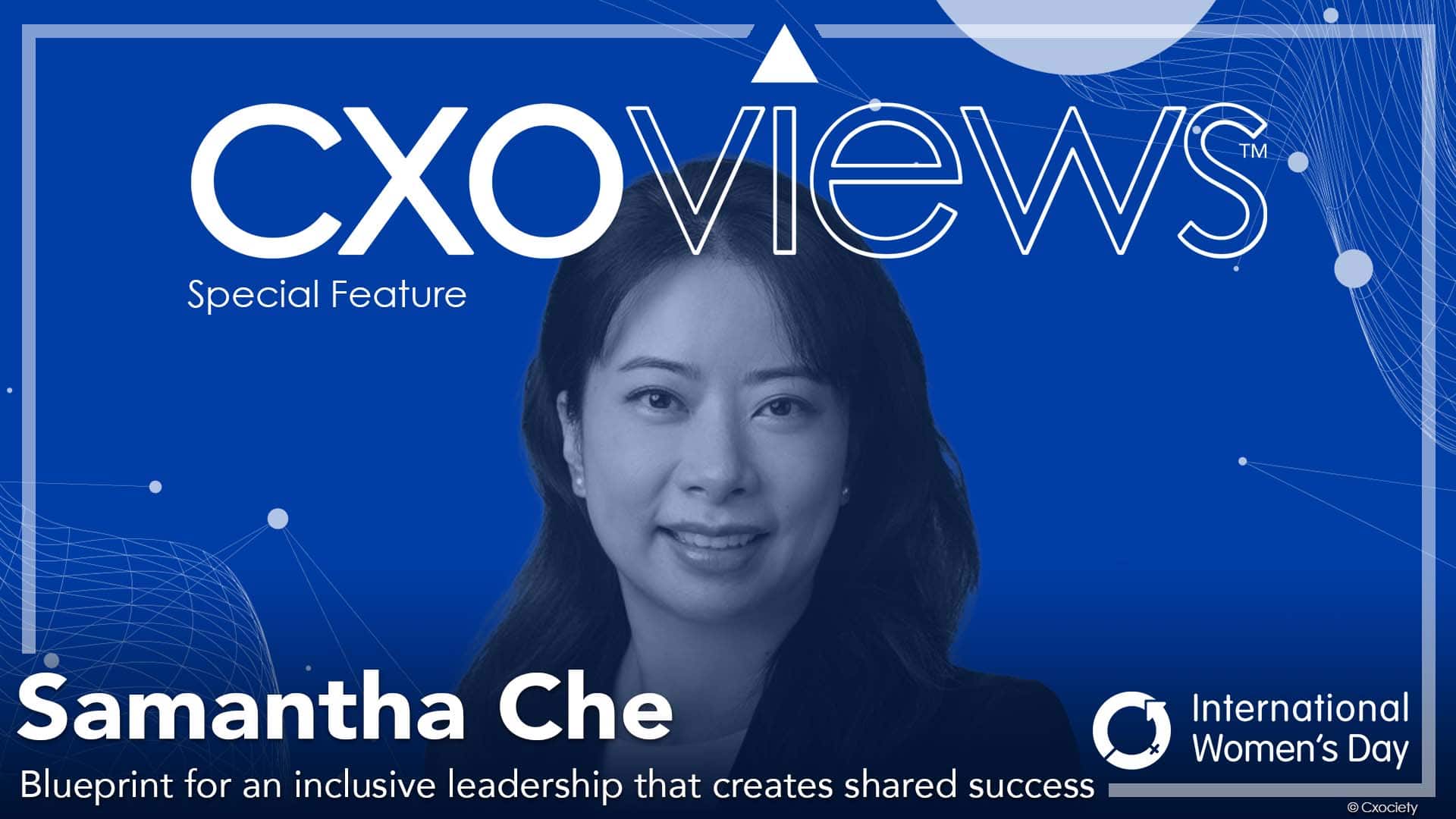
International Women’s Day 2026 carries a simple but powerful message: when we give, we gain. This year’s theme, “Give to Gain,” calls on individuals, organisations and communities to invest time, opportunities and support in women – recognising that empowering women multiplies benefits for businesses and society alike.
Globally, women still hold only around 34% of senior leadership roles. Yet in Hong Kong’s financial sector – where Samantha Che works – the picture is markedly brighter: women now occupy 45% of senior leadership positions and 37% of board directorships – according to the KPMG “Tipping the Scale” report, double-digit gains since 2018.
For leaders like Che, head of People & Culture at Sun Hung Kai & Co. Limited, “Give to Gain” is not a slogan but a daily practice with over 20 years in human resources in financial services, supported by credentials such as a Life Coach, Insights Discovery Practitioner and Mental Health First Aider, she partners with executives to drive transformation while building cultures where everyone shines.
A Women to Watch honouree and Mentor for The Women’s Foundation 2025/2026 cohort, her story offers a practical playbook for leaders of all genders who want high-performing, inclusive teams.
Being “too proactive” – and learning to shine differently
Early in her career, Che was pulled into a room and told she was “too proactive” and should “wait for your turn”. Instead of retreating, she revealed: “After reflecting, I decided not to let that affect me, dampen me. What it taught me was to reflect honestly whether it’s the environment that’s not ready for me, or it’s me that I’m not ready for the environment.”
That single experience now shapes everything she does. “Good leaders should be open to working with people with different styles, different backgrounds, not just people that talk like them, think like them,” she says.
She builds safe spaces where people can challenge ideas without fear. For Samantha, true success is collective: “The measure of success is not just how far I’ve come along, but also how far the people that I’ve worked with, that I’ve invested in, come along as well. Leadership is not just about how well you shine. It’s about how you let people that you work with shine.”
Turning DEI from “programme” to everyday practice
Che has led large-scale change in complex, matrixed organisations. She knows DEI can attract criticism: “Sometimes when you try to promote DEI programs, women leadership programs, there may be noises that say, ‘Is it positive discrimination?’”
Her answer is pragmatic inclusion, not quotas. She rolled out a Women in Leadership fireside chat series open to men and women: “We included male and female because we didn’t want to have that positive discrimination… what they shared was also applicable to young male talent as well.” She confirms that diverse shortlists and mixed-gender interview panels are standard practice.
No rigid policy is needed because conscious decision-making is embedded in daily processes. The proof? Over 38% of senior leaders at Sun Hung Kai & Co. are women – ahead of both global and even strong Hong Kong benchmarks.
“We don’t have a diversity policy that sets numerical targets per se… It’s not about meeting rigid quotas. It’s about having a more conscious approach in how decisions are made day-to-day,” Che explains.
Trust, flexibility and keeping talent in the pipeline
Che always starts with business goals: “It’s always about understanding what the business goals are… and then translating those into clear talent plans to drive high-performing teams.” HR, she insists, is not fluffy – it directly delivers results.
One standout initiative is the firm’s unlimited paid leave policy, rooted in trust:
“This is not just about a well-being gesture, but it’s really a deliberate action for us to show that it’s based on trust.” Samantha Che
Women no longer need to “rationalise their leave or feel guilty about weekday commitments such as parent and teacher interviews”.
Twice-yearly “bring your kids to work” events go further. Che shares a personal story: when her daughter visits the office, she gains a better understanding of busy periods and professional commitments, fostering respect and appreciation for her mother’s career and turning potential tension into mutual understanding.
These practical “gives” keep talented women progressing through peak caring years – and the whole team gains loyalty and performance.
Psychological safety and listening like a coach
As a certified Life Coach and Mental Health First Aider, she keeps hierarchy “at a very low level – in fact, there’s none. Everybody has something to contribute.” She actively invites her team to challenge her views and welcomes open disagreement: “If there’s something that you don’t agree with, let me know your perspective.”
Recently, her team ran a psychological safety workshop for people leaders at Sun Hung Kai & Co. Using Insights Discovery, Che is better able to understand different communication styles and confidence gaps, especially among mid-level and senior women navigating the question, “What’s the next step for me?”
Research, including that from McKinsey & Company, supports the approach: organisations that prioritise inclusive leadership and psychological safety see measurable increases in innovation, engagement, and performance. By giving airtime, listening deeply and coaching, she helps individuals thrive – and the business gains stronger, more resilient leaders.
Giving to gain: mentoring, visibility and board-level ambition
Che’s advocacy extends beyond the office. Despite moments of self-doubt, she applied to the Women to Watch programme: “I wasn’t sure whether I could make it… But I thought, you know what? There’s no harm in trying.” Her selection opened doors to board-level networks and practical insights.
She approached The Women’s Foundation mentoring programme with the same mindset: “I have a busy schedule, but I don’t believe in waiting until everything is perfectly aligned. Giving back matters now.”
In a recent group session on building alliances, her protégé added herself to the stakeholder map. Che was reminded of the oxygen-mask principle, recognising yourself as a key stakeholder is essential: “If you can’t manage yourself first,” she says, “you can’t look after your own wellbeing—or be in the right place to take on the challenges at work.”
Programmes like Women to Watch create visibility at scale: “If there is a board opportunity, they will also email you.” Giving time and insight reshapes who is seen as ready for senior and board roles – benefiting the entire talent pipeline.
Scaling opportunity for the next generation
Che is already extending the “Give to Gain” approach to early careers. Last summer’s internship programme welcomed six talented interns (three women and three men).
Three went on to receive extensions, including two women, and one secured a permanent role on Latitude’s fund of hedge funds team. In an industry traditionally male-dominated, the analyst group at Latitude is now proudly predominantly female—a testament to the team’s inclusive culture and commitment to developing talent.
Looking ahead, she plans to scale flexibility, well-being and inclusive leadership coaching:
“Sustainable gender parity currently depends on retaining women through peak career and giving years and not just promoting them.” Samantha Che
She coaches leaders on fair performance processes and sponsors talent development so more women – and the teams they strengthen – can rise.
Be your own cheerleader – and lift others
Samantha’s advice speaks to leaders at every level, male or female: “Be proactive, be confident and trust yourself. Be your own cheerleader.”
She warns against self-sabotage and cultural modesty: “You can be the most hard-working person, but if you’re not visible… sometimes you may be overlooked.”
For Che, “Give to Gain” starts with giving yourself permission to be seen, then using that platform to create opportunities for others. When leaders do this, women shine brighter – and entire teams rise.
She proves that inclusive leadership is not a trade-off; it is a business strategy. By building trust, visibility, flexibility and coaching into everyday leadership, she creates workplaces where everyone – women and men – can contribute fully.
In 2026 and beyond, her playbook shows that when we give generously, the gains are shared by all.